
















Tokyo Stillness
See Tokyo, differently.
History, Culture & Artisans 2026.07.17
The Sound of a Tokyo Breeze: Discovering Edo Furin at Shinohara Furin Honpo
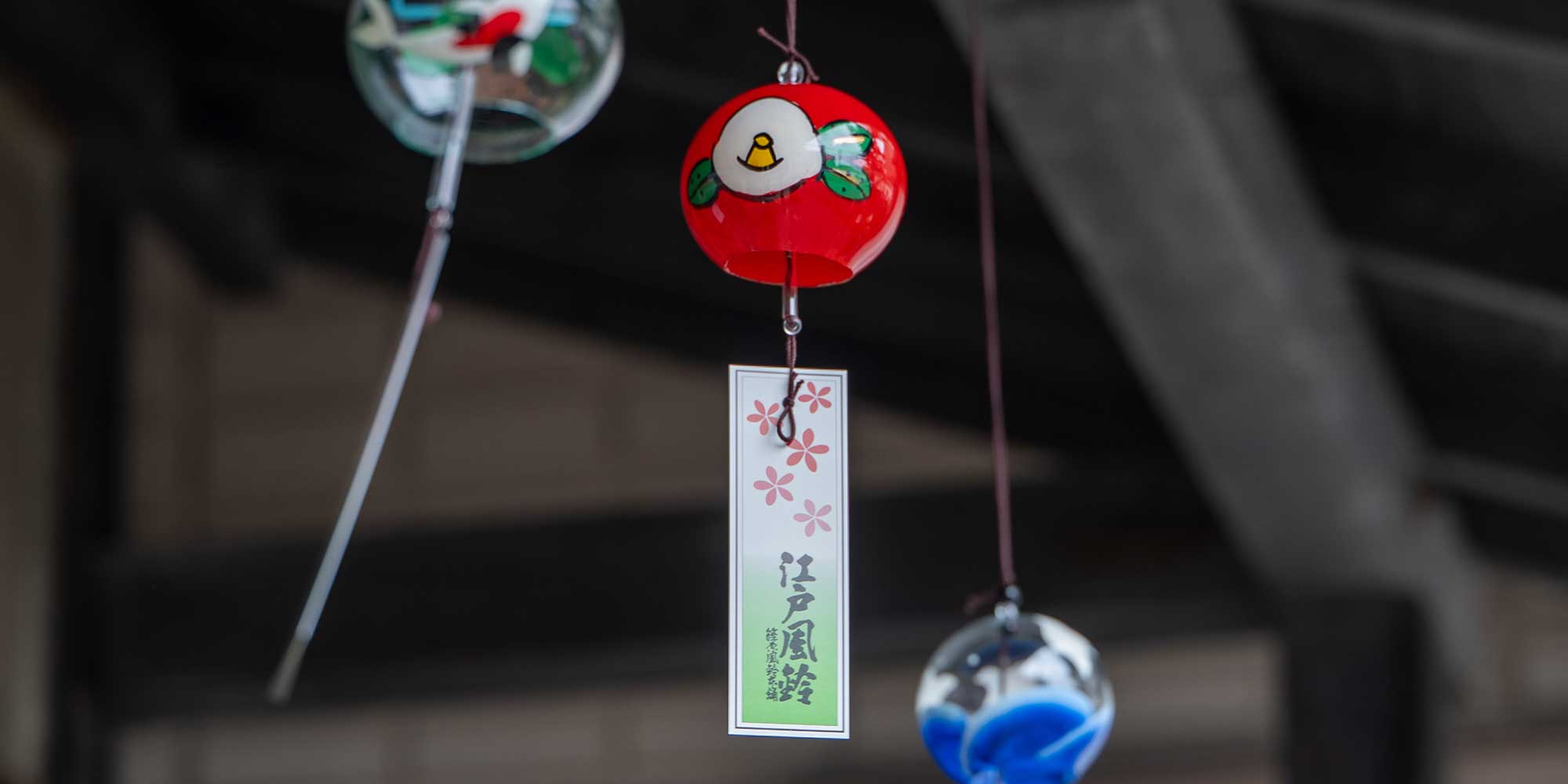
Tokyo summers can feel relentlessly hot. The glare of the sun, the heat radiating from the sidewalk, and the humid air that seems to cling to your body as you walk through the city. Yet in Japan, there is a traditional way to create coolness not by lowering the actual temperature, but by transforming how we perceive it. One example is the furin, or Japanese wind bell.
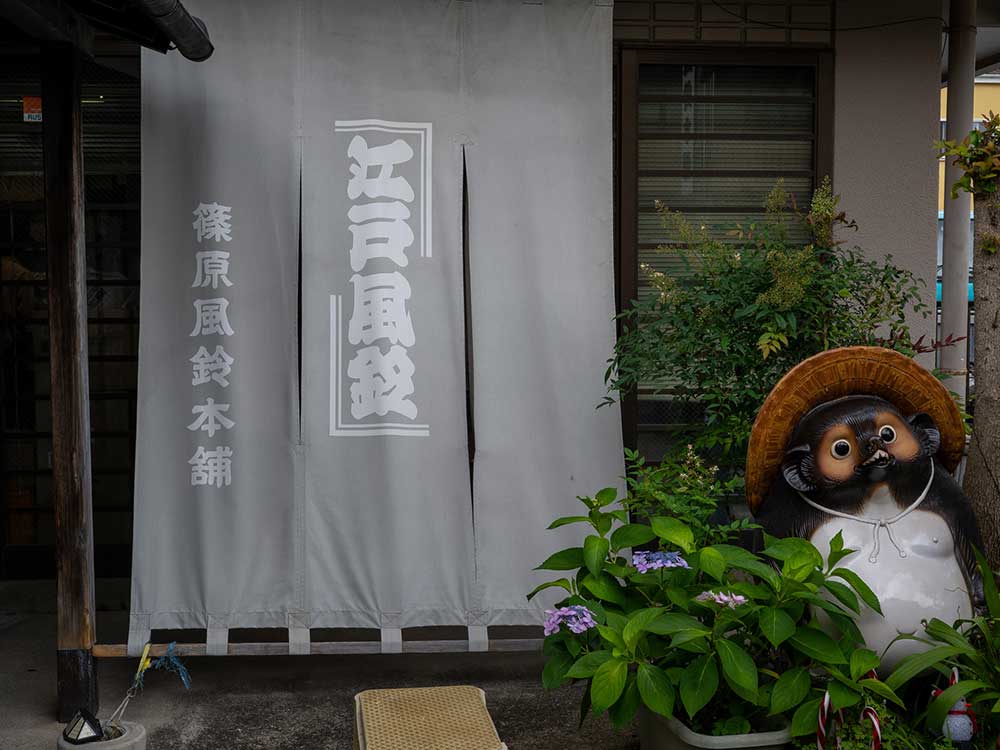
Only when the wind blows does the small glass bell begin to ring. It does not exactly make the air cooler, but for a moment, the captivating sound seems to soften the summer heat. At Shinohara Furin Honpo, a workshop in Edogawa City, these Edo furin—glass wind bells that embody this distinctly Japanese sense of refreshment—are still made individually by hand.
Visitors to the workshop can observe artisans at work and paint their own wind bell. Choose your preferred sound, paint a design on the glass, and take your finished piece home. This experience offers more than just a souvenir. It is a unique way to create lasting memories of a summer spent in Tokyo.
A Craft Designed to Catch the Wind
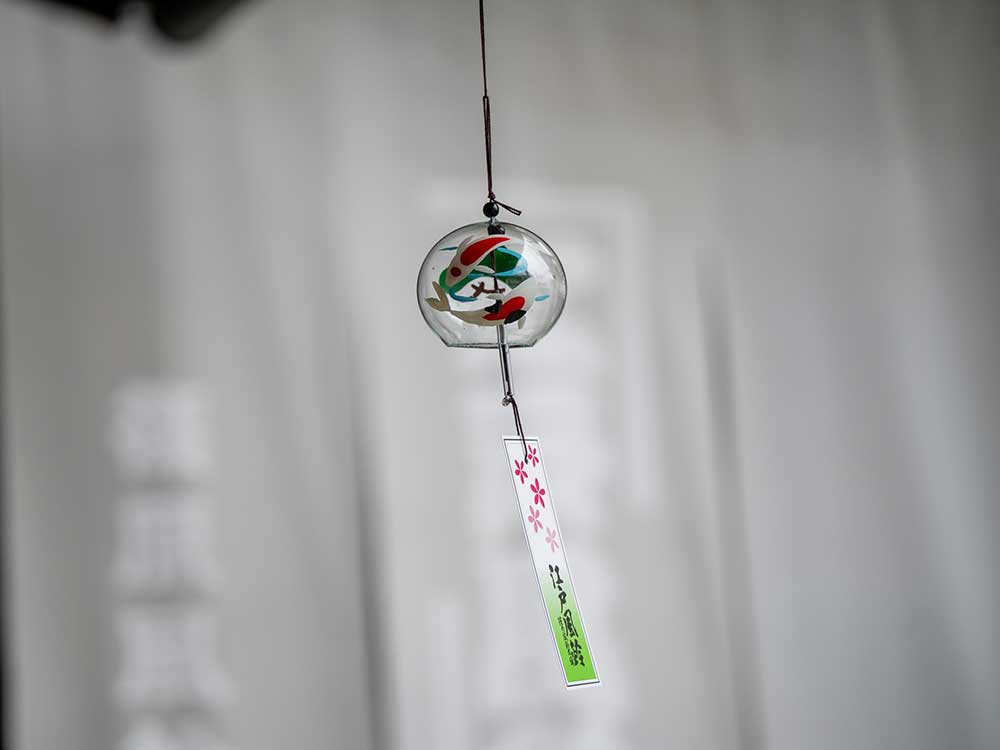
When people hear the word furin, many picture a glass bell swaying beneath the eaves on a summer day. At Shinohara Furin Honpo, visitors not only get to choose an Edo furin but also tour the workshop and even try painting one themselves. They can observe the artisans up close, paint the inside of a clear glass bell, and take home their own finished work.
When asked about what makes Edo furin special, Emi Shinohara, representative of Shinohara Furin Honpo, began by discussing why they produce sound in the first place.
“A furin doesn’t sound because someone is signaling something,” she says. “In English, people sometimes call it a ‘wind chime,’ but a chime usually rings to get your attention. A furin isn’t like that. The wind blows, and it rings. That’s all it is.”
You do not ring it yourself; you leave it to the wind. When the bell sounds, you realize there is a breeze. That quiet, receptive quality is part of what makes a furin so charming.
“Because you only hear it when there’s wind, it feels very much a part of nature,” Shinohara adds. “It reflects that distinct Japanese appreciation for nature.”
A Sound That Blends into the Air
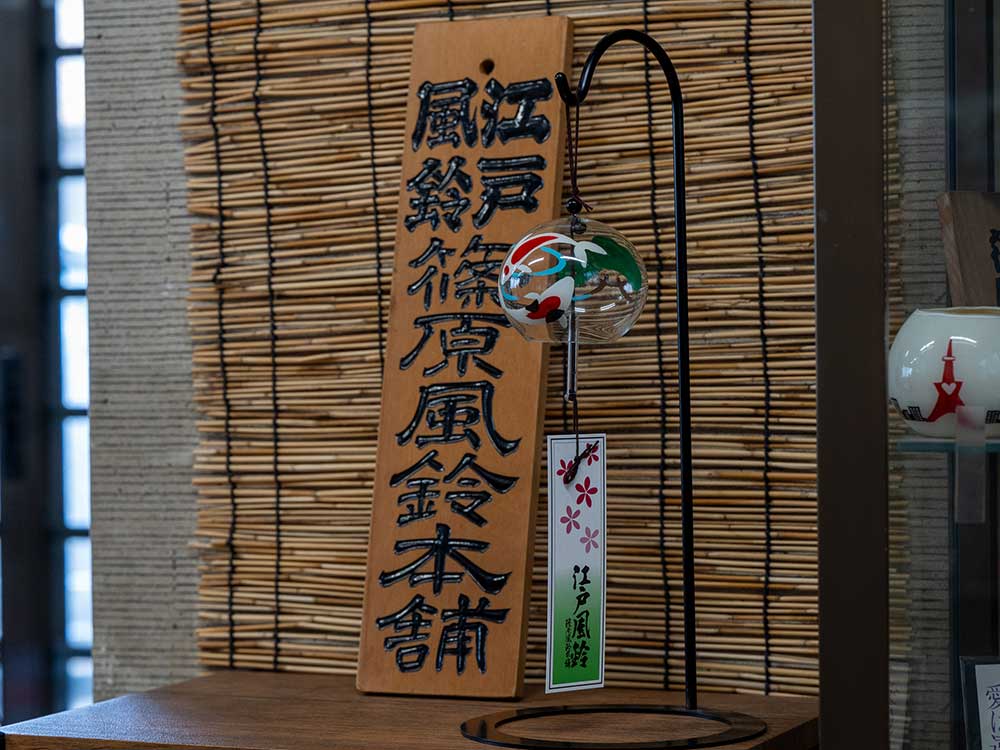
The sound of an Edo furin has a certain softness that comes from glass. On TV and in commercials, glass wind bells often symbolize summer. However, even if you see a glass furin, Shinohara notes that the sound effect used may actually be from a metal wind bell.
“The sound of a glass wind bell is really soft,” she says. “It’s pleasant and gentle, but in another sense, it doesn’t have much impact. So, when a production wants to make the sound stand out, they sometimes use a metal wind bell instead.”
That subtle quality, however, is exactly what makes an Edo furin what it is. Its sound does not linger forcefully in the ear; it slips into the surrounding air. Instead of “announcing coolness,” it simply helps you notice it.
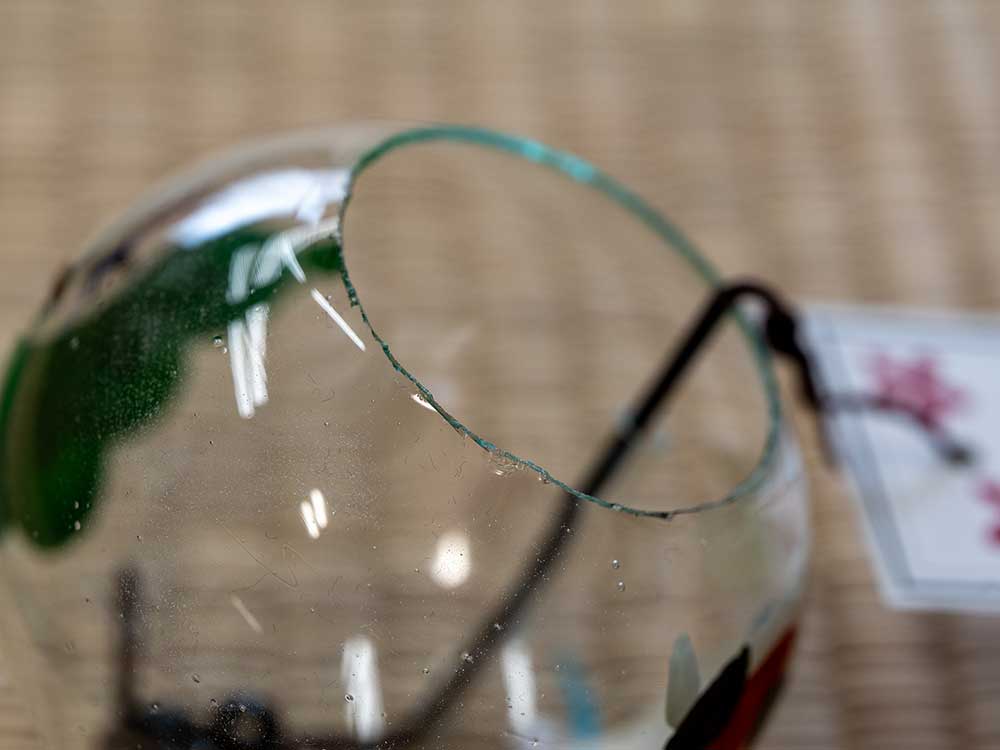
Another defining feature of the Edo furin’s sound is its lower rim, known as the nariguchi. In Edo furin, this edge is intentionally left slightly uneven rather than being polished completely smooth.
“If the rim is smooth, you only get the sound of something being struck, but not the sound of friction,” Shinohara explains. “With Edo furin, we leave the edge uneven so you can hear both the striking sound and the rubbing sound. That’s part of what you can enjoy.”
When the wind is strong, the bell rings clearly. When the breeze is light, it gives off a faint, brushing sound. The character of the sound changes with the wind at that moment. Even from the same bell, no two sounds are exactly alike. In the sound of Edo furin, the variations of nature and handiwork come through as they are.
Blown by Feel, Without a Mold
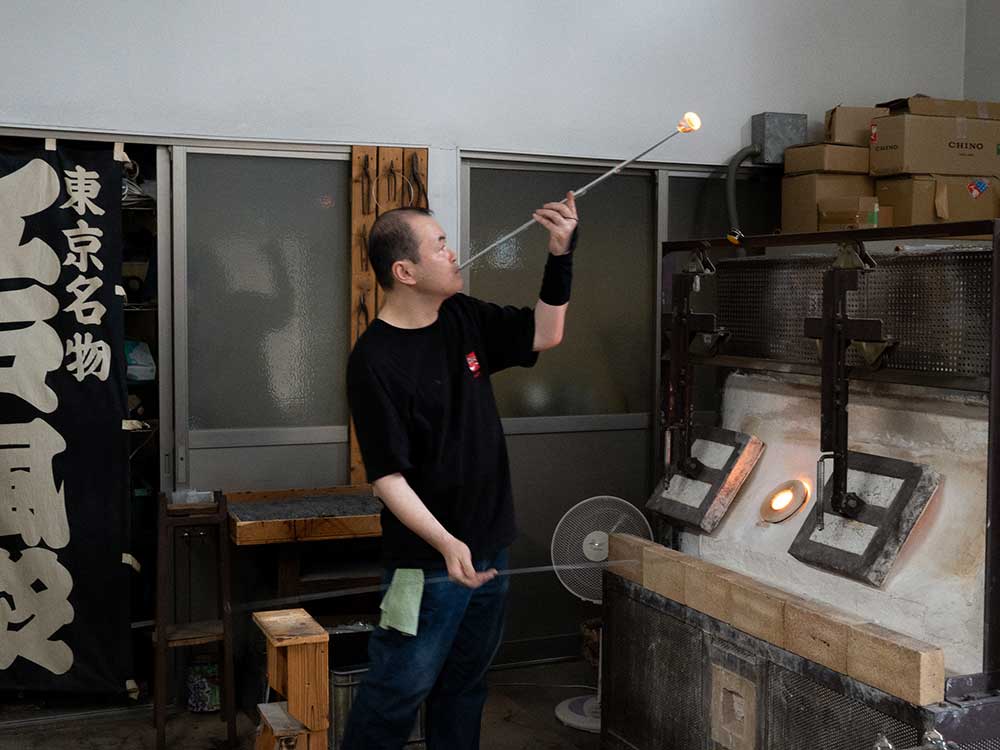
Edo furin are crafted using a glassblowing technique called chubuki, where the glass is inflated without a mold.
“Every part of the blowing process is challenging,” Shinohara says. “Working with molten glass is difficult from the start—even gathering it is tough—and shaping it the way you want is even harder. Using a mold allows you to replicate the same piece repeatedly, but with chubuki, you are entirely on your own.
It takes approximately three years for an artisan to learn how to blow a small glass ball. Making the larger spheres used for wind bells requires around ten years of experience. Even when furin with similar designs are lined up, each one differs slightly in shape and thickness. These subtle differences influence the sound.
“The sound isn’t determined by a single step,” Shinohara explains. “It’s a combination of factors—the shape, the size, the thickness. And the thickness itself varies. The sound is truly a product of everything working together.”
Rather than being mechanically engineered to achieve a fixed result, the sound emerges uniquely from each piece. This is why one of the joys of choosing an Edo furin is actually listening to its distinctive ring.
More Than a Clear High Note
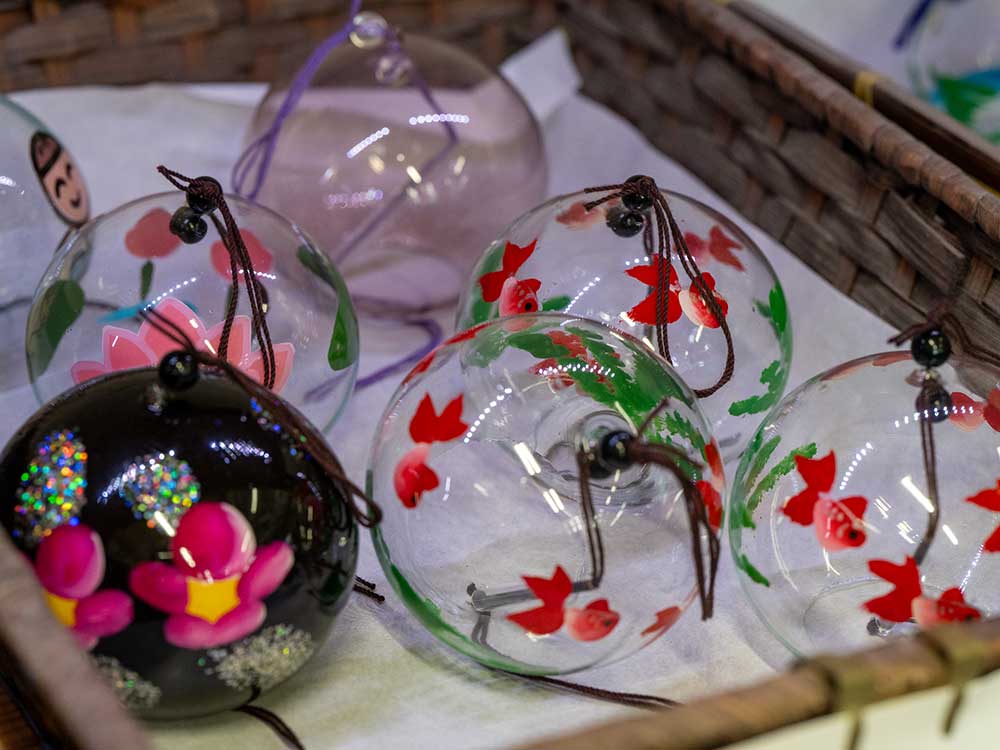
At Shinohara Furin Honpo, the shop places great value on allowing customers to hear each bell and choose the one they like. You might first be drawn to a bell’s appearance, but it is only after picking it up and listening that you make your choice. Selecting a furin is an experience for both the eyes and the ears.
It is worth noting, however, that some finished wind bells are set aside because their sounds do not meet the shop’s standards.
“Glass doesn’t naturally resonate as long as metal,” Shinohara explains. “If the resonance is too short, or if the sound is too harsh, we set it aside. If the glass is too thick, the sound becomes more of a dull knock.”
A furin cannot be judged by appearance alone. Does it ring with a gentle sound? Does it blend naturally into the air? Recognizing this requires an artisan’s ear, trained over many years.
Traditional Technique, Changing Designs
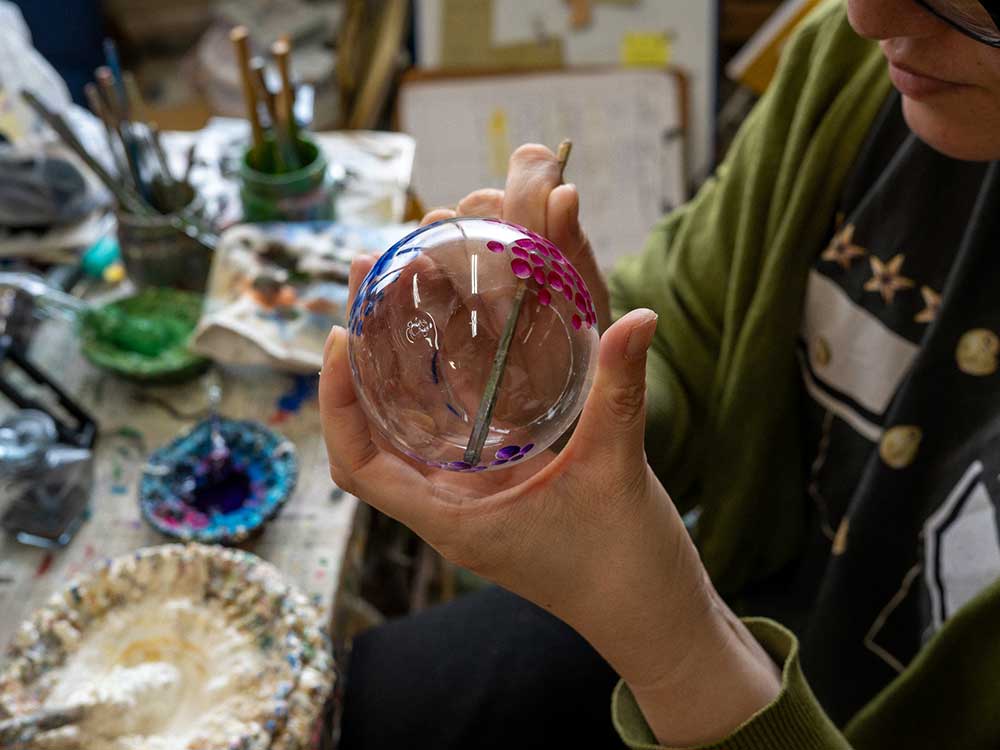
Another feature of Edo furin is the painting, which is done on the inside of the glass. Because the design is painted on the inner surface, the finished image is viewed through the transparent curve, protecting the artwork from wear and tear. The rounded glass gives the image a distinctive sense of depth.
“At first, painting from the inside seems tricky,” Shinohara says. “But once you get used to it, it can actually be more convenient. If you paint on the outside, you need to be extra careful not to touch the surface. Painting on the inside lets you hold the bell however you like.
The designs have changed significantly over time. In the past, most furin were red and painted with auspicious motifs such as treasure ships, pine, bamboo, and plum. Today, designs evoking coolness—fireworks, fireflies, hydrangeas—have become standard.
“In the old days, because they had to make so many, the designs were much simpler,” Shinohara says. “Now, people won’t buy them unless they’re beautiful. Some designs came about simply because we thought customers would enjoy seeing them.”
The handcrafting techniques remain unchanged, even as the designs continue to evolve. The coexistence of tradition and innovation keeps Edo furin feeling fresh in modern times.
A Sense of Coolness That Translates, and a Beauty That Needs No Translation
Many visitors who participate in the painting experience come from overseas. They paint their own designs on prepared wind bells and take home a one-of-a-kind keepsake. The activity brings together the joys of seeing, painting, and listening.
Japanese visitors often opt for cool and subdued colors, while visitors from abroad may choose vivid reds and oranges. This sometimes contrasts with the Japanese idea of ryo, or summer coolness. Still, if someone finds a wind bell beautiful and enjoys it in their own way, that too is a natural response.
“It starts with the image,” Shinohara says. “People interested in a furin first notice it with their eyes: ‘Oh, what a unique design,’ or ‘I’d like one with that kind of image.’ Then comes the sound. I hope people enjoy both—visual beauty and the melody.”
Through seeing, painting, and listening, an Edo furin becomes more than a souvenir. It serves as a tangible memory of a summer spent in Tokyo.
The tone of an Edo furin allows you to appreciate even the moments spent waiting for the wind. You can admire the handcrafted painting on the glass and listen closely to the subtle differences in each bell’s sound. An afternoon visit to the workshop, about an hour by train from Hilton Tokyo Odaiba—before retreating to the seaside hotel by evening—creates a tender memory of a fulfilling summer journey that truly resonates.
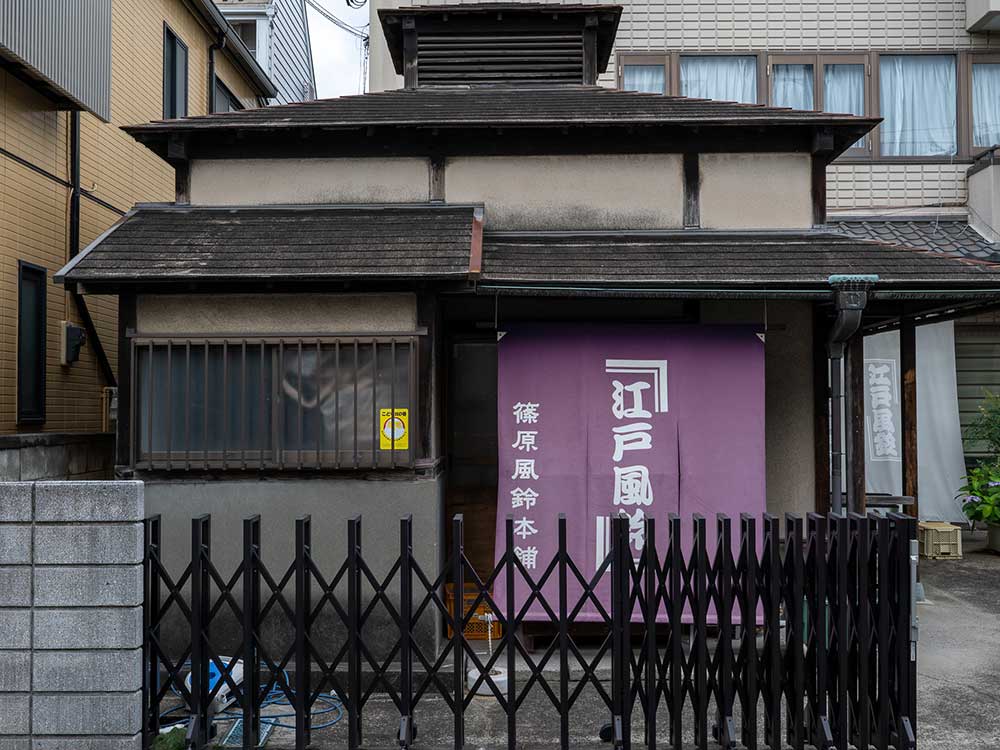
Shinohara Furin Honpo
Address: 4-22-5 Minami-Shinozaki-machi, Edogawa-ku, Tokyo 133-0065
Phone: 03-3670-2512


