















Tokyo Stillness
See Tokyo, differently.
Nature & Landscape of Japan 2026.05.27
Plovers Soaring Above Rolling Waves: Tranquil Landscapes Crafted in Silver by Metalwork Artisan Masako Shiozawa
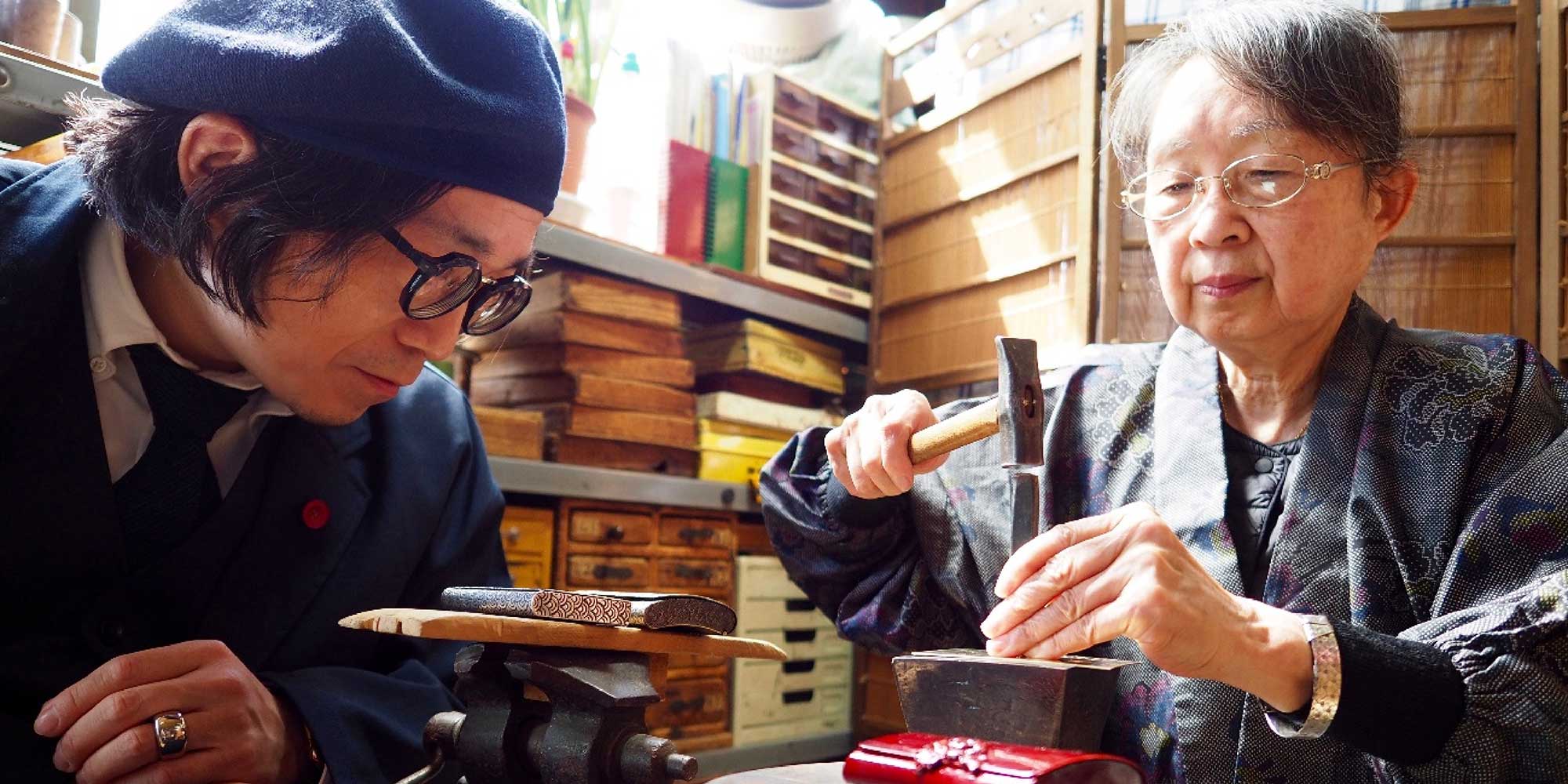
In Tokyo, there remains a sense of time that is unhurried. In the workshop of ornamental metalwork artisan Masako Shiozawa, the sound of a chisel striking silver fills the air. One strike at a time, rolling waves emerge, plovers take flight, and a small landscape comes to life in the palm of the hand. This peace found in handcrafting cannot be measured by efficiency or novelty alone. Creative Director Tsutomu Kanaya visits Shiozawa’s workshop to explore the enduring value of time exquisitely preserved in Japanese craftsmanship.
A Serene Landscape in the Palm of Your Hand
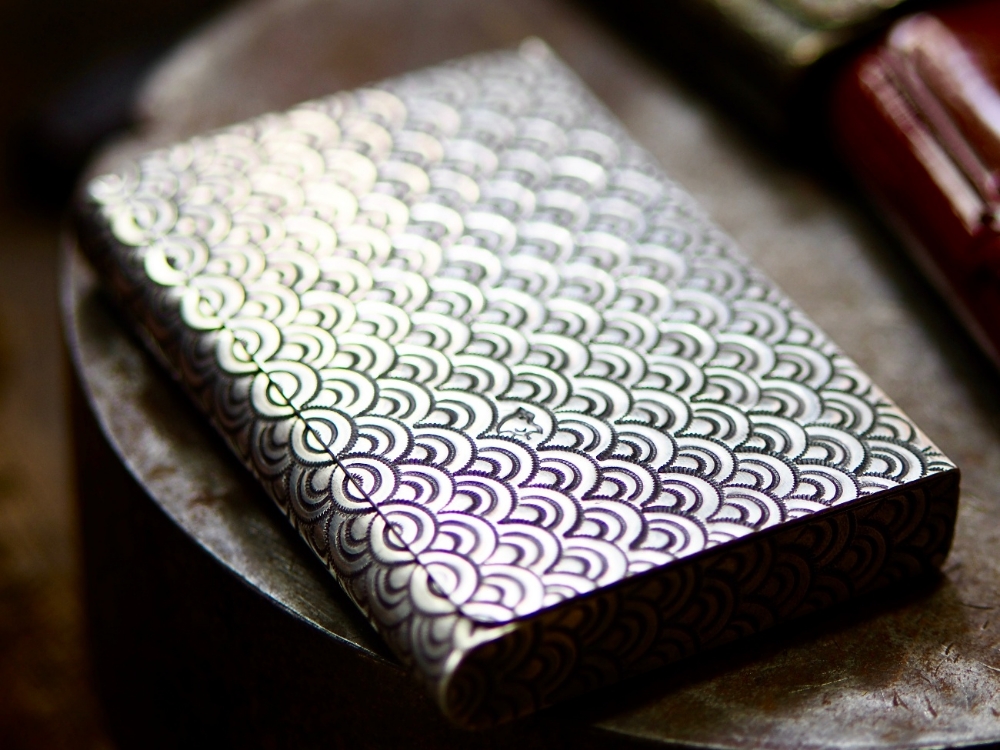
Whenever I take out my sterling silver business card case, people almost always say the same thing: “It’s heavier than I expected,” followed by, “But it doesn’t feel cold to the touch.” Across the case’s surface is the seigaiha pattern—layer upon layer of calm, repeating waves. Above them is a softly rounded plover in flight. The card case was crafted by metalwork artisan Masako Shiozawa.
Tokyo is home to artistic creations that embody a quiet, unmistakable beauty—pieces that never need to announce themselves. A tranquil landscape can exist not only in the distance, but also in the palm of your hand.
Each Strike Creates a Gentle Wave
The word kazari—decorative metalwork—is becoming less familiar in modern Japan. Kazari includes the fittings that adorn shrines, temples, and portable mikoshi, as well as the metal hardware used as reinforcement and embellishment on the corners of traditional chests.
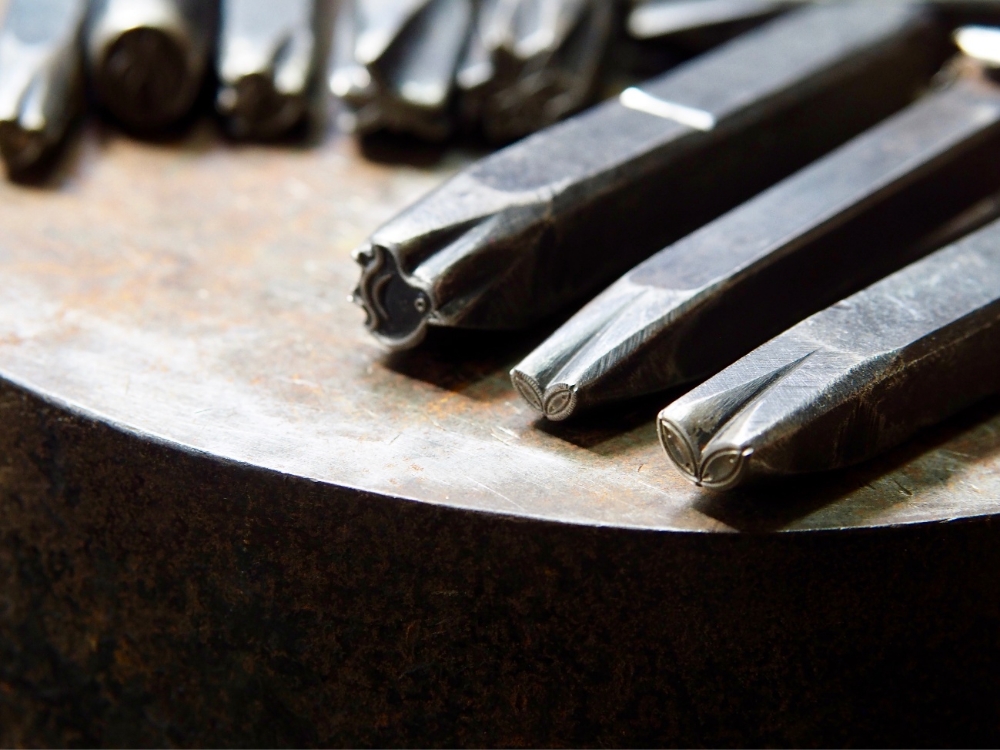
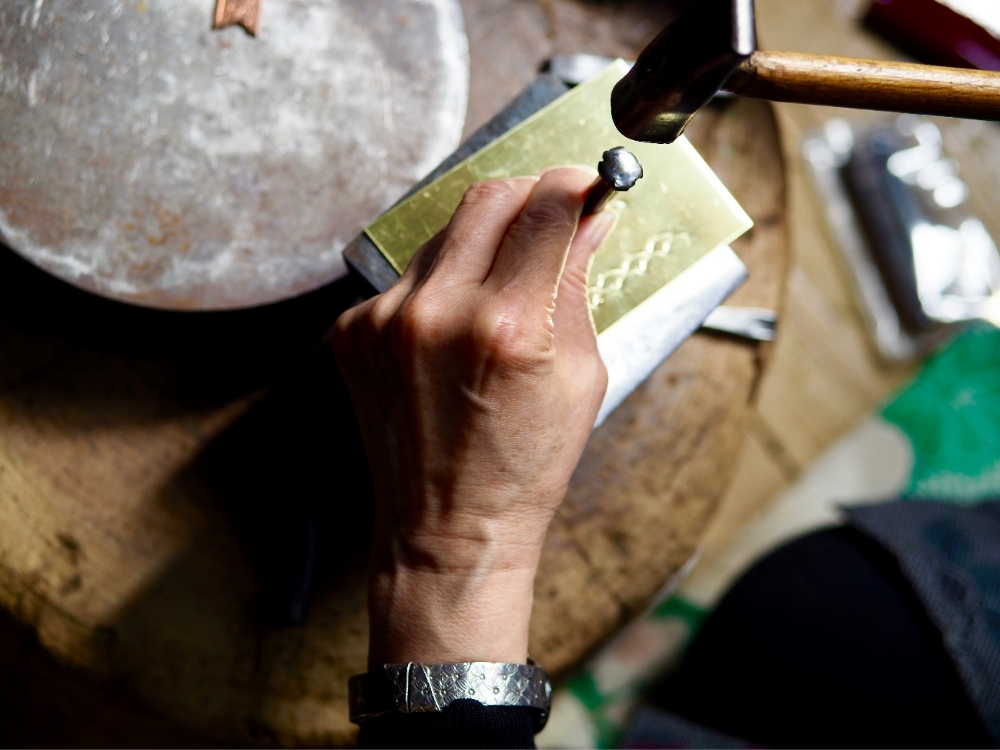
When you step into Shiozawa’s workshop, the first thing that catches your eye is the collection of chisels spread across the workbench. These metal tools, large and small, are neatly lined up in rows. In her hands, each tool transforms elements into a wave, a shippo pattern, or a plover.
The seigaiha pattern is never designed with a mold. With each strike, the fan-shaped chisel creates a subtle dent in the metal, the surrounding surface rises, and the way light is reflected shifts. Only after repeating this single strike countless times does a “wave” finally begin to emerge.
The same applies to the shippo pattern. There is no circular stamp. Instead, Shiozawa uses an oval chisel shaped like a leaf, gradually shifting it as she works to connect the contours. The moment her hand stops, the rhythm is broken, and the line is distorted. For this reason, once she starts, she must continue striking until the entire surface is finished.
Shiozawa says most of her work happens at night. During this time of day, the phone is silent, and no one stops by, allowing her to focus on her metalwork. These late hours bring a different rhythm, one that has nothing to do with the hustle and bustle of the city. All you can hear is the sound of the chisel against silver as the pattern slowly comes to life. The quiet is not simply the absence of sound. It is a productive stretch of time where everything unnecessary fades away, leaving only the artisan and the material.
Time Lives on in Tools That Survived the Fire
“If I lose focus, I have to start all over from the beginning,” Shiozawa says with a laugh. Yet, behind those words is the reality of time spent discarding piece after piece.
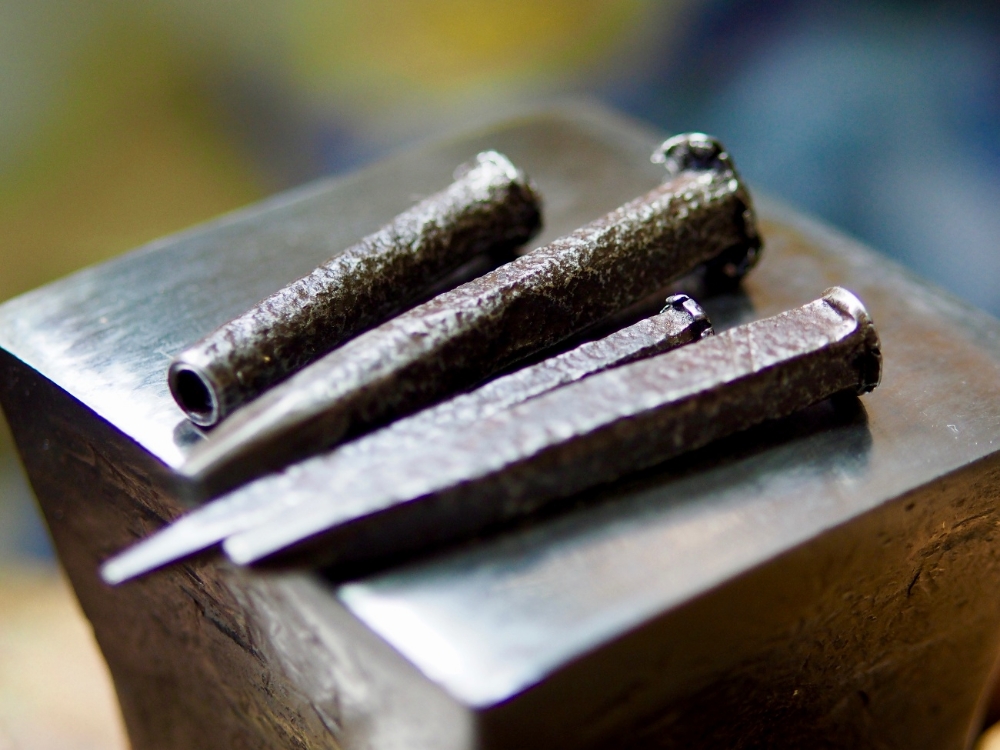
Once, she showed me a bundle of scorched, blackened chisels from a shelf in the workshop. During the air raids of World War II, the family gathered their tools together to evacuate, but they were ultimately burned. Later, neighbors collected what they could and returned it to the family.
The surfaces are rough now, and the handles have worn short. Even so, Shiozawa continues to use them with care. “They are part of our family’s assets,” she says. Looking at them, I felt I was witnessing a sense of time entirely different from the disposable mindset of the present.
Continuing to use tools that survived a fire in a city where new things constantly replace the old is not mere nostalgia. It is a way of carrying time forward rather than throwing it away.
Prayer and Function in a Single Strike
The Shiozawa family’s craft traces its origins to the decorative fittings used in shrines, temples, and portable mikoshi. Their work is not only about protecting corners and reinforcing structures, but also involves inscribing prayers into each piece through delicate patterns. From the beginning, strength and beauty have always co-existed in every strike.
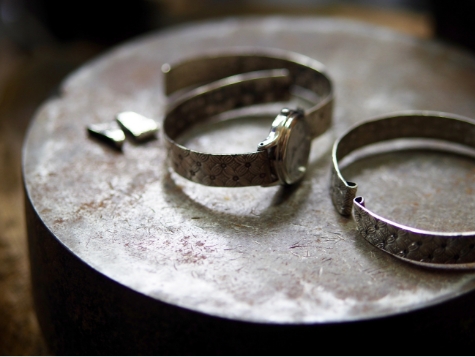
This is why the card cases and accessories Shiozawa creates are more than just simple ornaments. They possess a quiet resilience. Even with daily use, tucked into a pocket, they remain unchanged. And yet each time you pick them up, their surface seems to shift ever so slightly. That contrast—the durability and the subtle transformation—is what makes them truly satisfying to own.
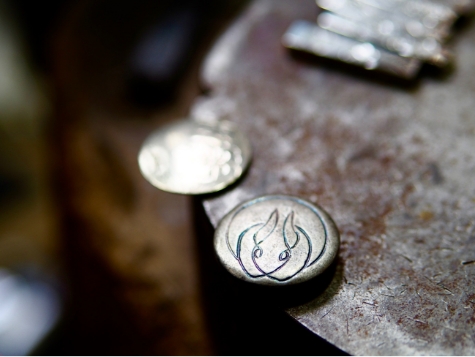
What is particularly interesting is the choice of motifs. Shrine crests, Daikoku’s money pouch, and patterns once reserved for mikoshi—designs that were traditionally part of ritual spaces now appear, almost casually, on chopstick rests, magnets, and golf markers.
“If I find something cute, I am inspired to transform it into a piece,” Shiozawa says with a laugh. While her demeanor is lighthearted, the foundation beneath is the disciplined technique she has honed through years of crafting shrine and temple fittings.
This blend of skill and subtlety is what makes her work so captivating. Each piece brings a sense of prayer and story into everyday life. It stands on its own, needing no explanation. The moment you hold it, you immediately feel its essence.
Decoration Is Not Excess. It Is Where Stories Live.
As a product designer, I have always thought about how decoration and function can co-exist. To me, Shiozawa’s work provides a comprehensive answer to this question. A metal fitting, originally designed to protect a corner, becomes something else entirely when an auspicious pattern is carved on it. With this single, thoughtful addition, a simple reinforcing element begins to embody both intention and narrative.
The same concept applies to the business card case. While its primary purpose is to protect the cards inside, it also serves as a subtle reflection of the owner’s taste and values.
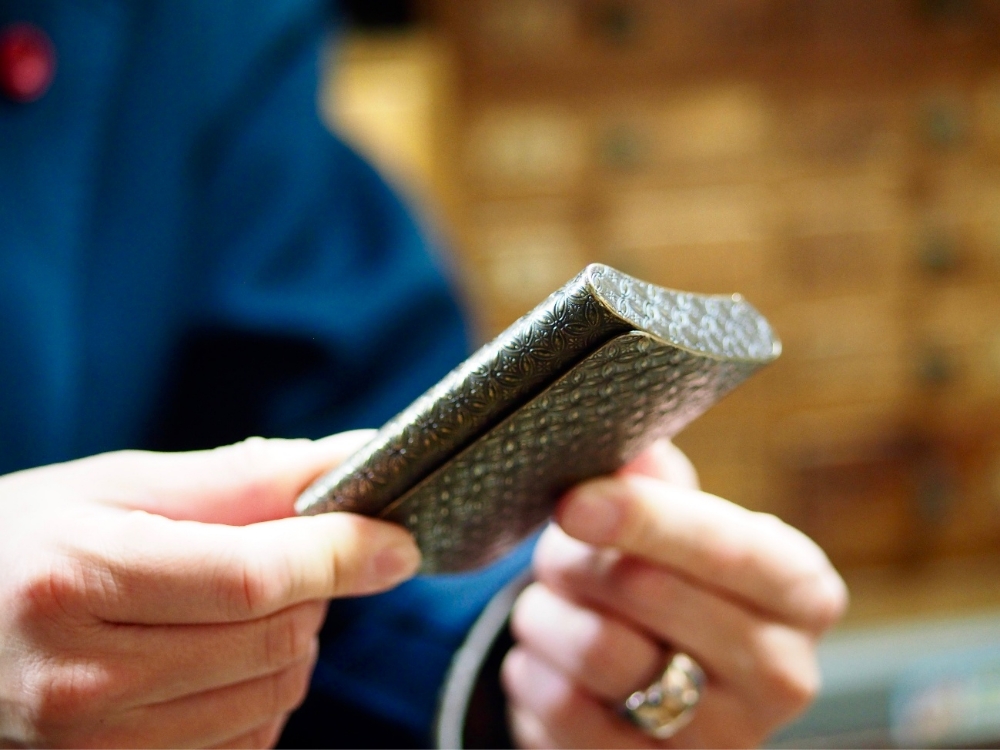
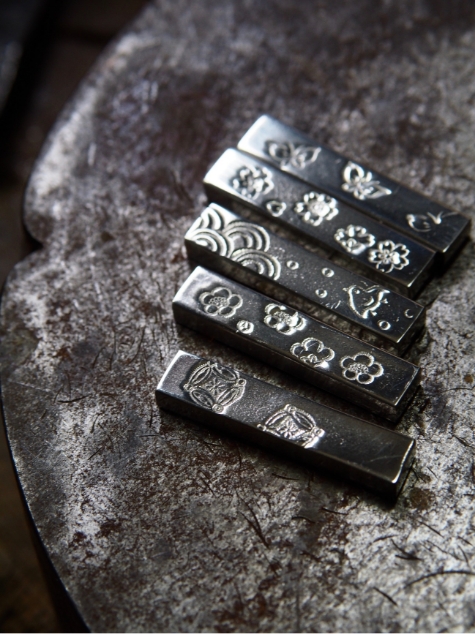
When we become accustomed to mass-produced products, the act of hand-carving a pattern may seem like an unnecessary expense. And yet when you hold something that still bears the marks of each individual strike, it offers you a unique sense of reassurance. It is clear that a human hand has shaped it, and time has been invested in its creation. That concentrated effort seems to soften the chill of silver, infusing it with a gentle, familiar warmth.
There is a value that goes beyond efficiency: taking time, working with one’s hands, quietly giving form to something that surpasses pure function. Shiozawa’s metalwork embodies that richness of Japanese craftsmanship in each small piece of metal.
A Tranquil Japanese Landscape You Can Carry Home
When people talk about Japanese craftsmanship, traditional craft is often presented as something impersonal—something you encounter in museums or shrines, far removed from daily life.
However, when you spend time with Shiozawa’s work, you feel something different: I want to take a piece of this home with me, even if it is just small enough to fit in my palm. It could be a business card case, a chopstick rest, or a magnet. Just having one piece of her metalwork in your everyday life feels as though it might subtly change the way time flows around you.
When you watch her at work in the studio, the steady rhythm of metal being struck begins to sync with your own breathing. It is a reminder that the world can move at a completely different pace from the constant flow of information from computers and smartphones.
That silver card case, engraved with waves and a plover, may be just such a fragment of time—a small landscape you can slip into your pocket.
Tokyo is a city that is constantly changing. And yet in handiwork like this, there remains an unhurried sense of time, an inherited sense of beauty, and scenes quietly formed over generations. The stillness offered by Hilton Tokyo Odaiba is, in its own way, another perspective to appreciate the value of such moments.
To stand by the sea and look up at the sky to briefly escape the city’s pace, or to admire the waves carved into a piece of silver in the palm of your hand. Both experiences invite you to discover that sense of quiet that still exists within Tokyo.
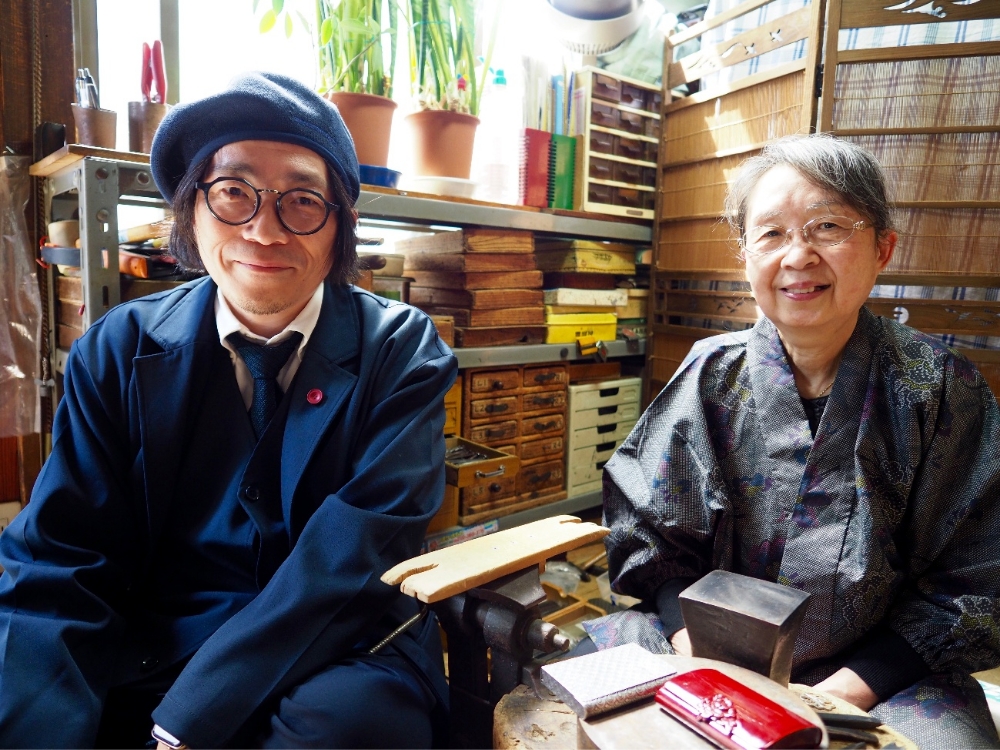

Tsutomu Kanaya
Tsutomu Kanaya is President of Cement Produce Design and a lecturer at Kyoto Seika University and Kanazawa College of Art. Guided by the idea of “collaborative regional industry for everyone,” he has worked with more than 600 factories and craftspeople across Japan to develop new products and create sales channels that make use of local manufacturing techniques. His books include *How Small Companies Survive* (Nikkei BP).
URL: https://www.cementdesign.com/


