












Tokyo Stillness
See Tokyo, differently.
Food Experiences 2026.11.13
New Year Dining Begins in October
Keeping Tradition on the Menu at Sakura
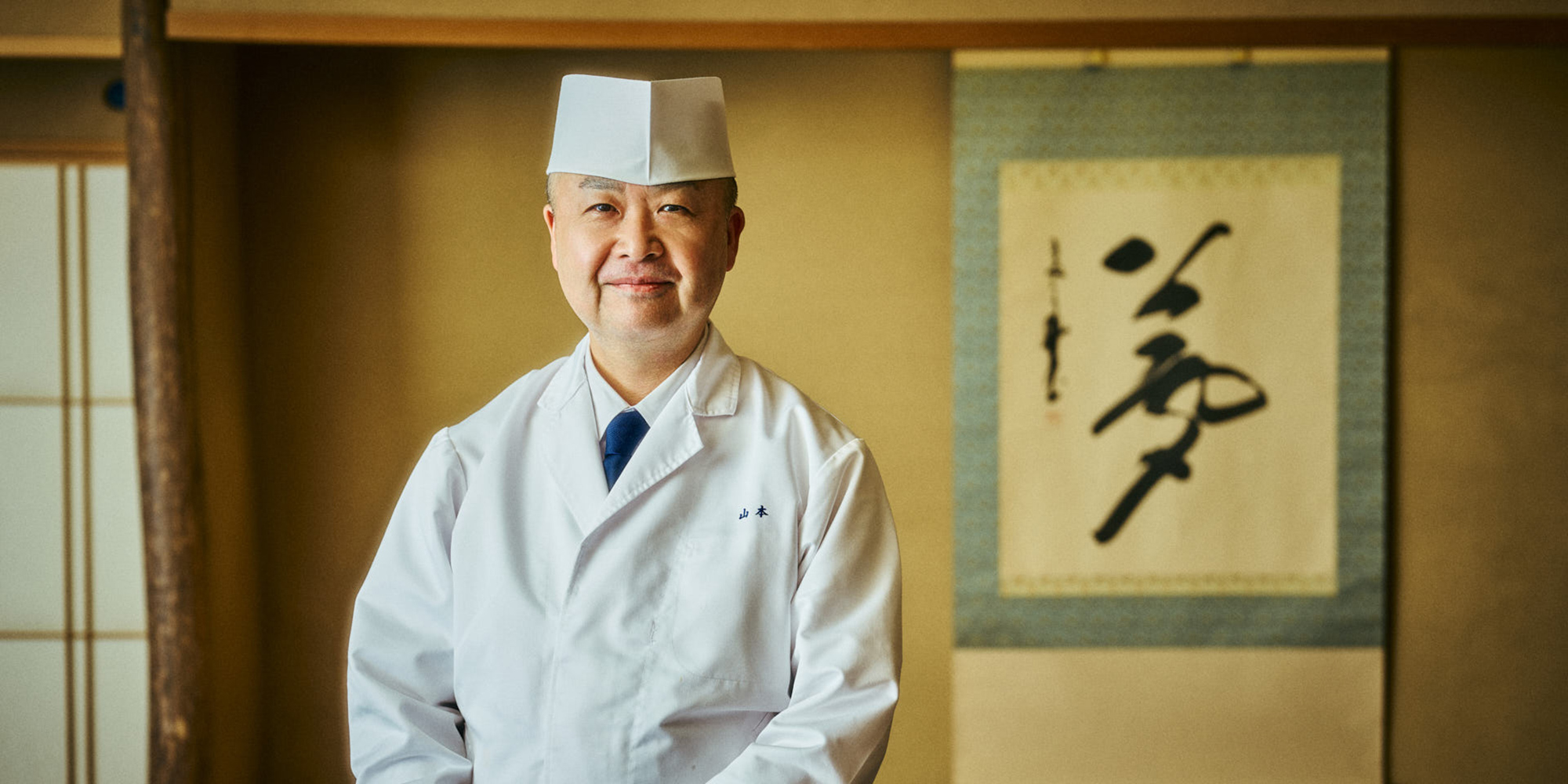
It is early October in Odaiba. The last of summer’s warmth lingers, and autumn is only just beginning to make itself felt. Yet at Sakura, the Japanese restaurant at Hilton Tokyo Odaiba, Executive Chef Masahiro Yamamoto has already started preparing for the New Year. The special menu will be served for just two days, January 1 and 2. What goes into those meals, and what does he hope guests will take away from them? We spoke with Yamamoto about the winter preparations that begin in his kitchen.
Masahiro Yamamoto
Masahiro Yamamoto is the executive chef of Sakura, the Japanese restaurant at Hilton Tokyo Odaiba. He has been working at the hotel for nearly 30 years, since its early days. After roles including head chef at the tempura counter, he now oversees Sakura. He values the reassuring familiarity of traditional Japanese cooking and takes a broad view of hospitality, from the food and tableware to presentation, seasonal details and the time guests spend at the table.
Familiar Flavors for a New Year
“We don’t make big changes to the New Year’s menu from year to year.”
Red-and-white kamaboko fish cakes, black soybeans, sweet datemaki omelet, sweet kinton mash, shrimp, salmon roe, herring roe, lotus root, and bamboo shoots: Yamamoto builds the meal around foods steeped in celebratory meaning.
“We include foods associated with New Year’s celebrations and good fortune. If we’re serving Japanese cuisine, I want to stay true to those traditions as much as we can.”
Today, osechi, the traditional Japanese New Year meal, often incorporates meat dishes and Western-style cooking. At Sakura, however, the priority remains the comforting familiarity guests expect from Japanese cuisine. Keeping those flavors consistent is not the same as being old-fashioned. Returning to familiar tastes at the turn of the year is an essential part of the warm welcome the hotel offers at New Year's.
A Meal at Your Own Pace
At home, families typically share osechi from large tiered boxes. At Sakura, each guest receives an individual serving so everyone can dine at their own pace.
“A tiered box usually holds enough for three or four people. Here at the hotel, we give each guest their own serving so they can truly take their time.”
There is no need to serve anyone else or rush through the meal. Guests can take in the presentation and enjoy each dish in turn. While the food honors deep-rooted tradition, the presentation perfectly suits the relaxed pace of a hotel stay.
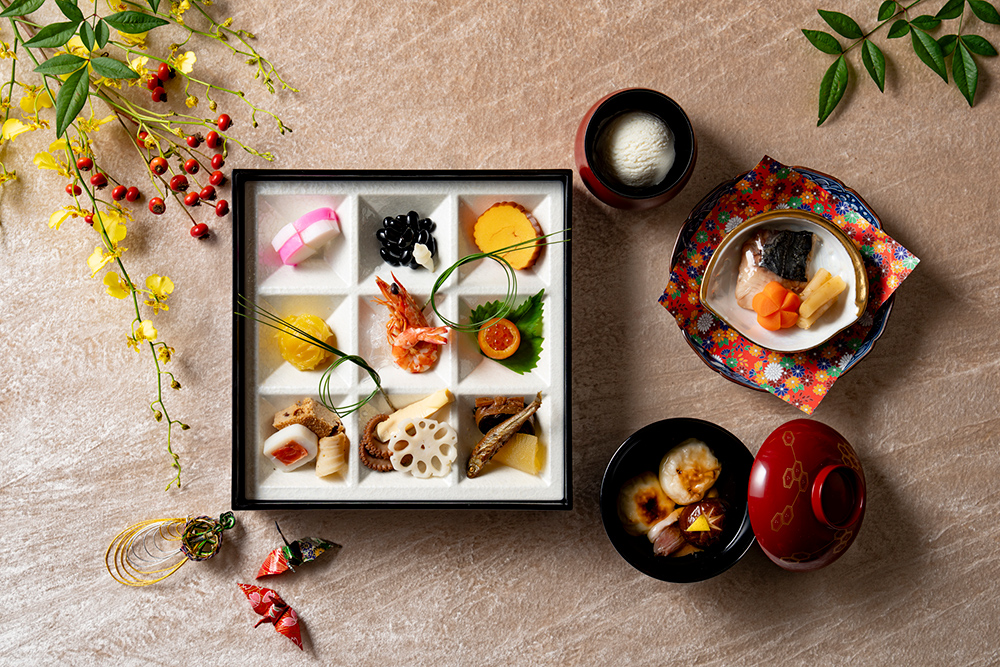
Served only on January 1 and 2, Sakura’s New Year menu brings together traditional celebratory dishes, spiny lobster sourced in Japan, grilled dishes, and soup. Each guest receives an individual set meal to enjoy at their leisure.
Preparing for January in the Fall
The vivid red of the spiny lobster immediately catches the eye. Yamamoto uses lobsters sourced in Japan, each weighing about 200 grams. He buys them raw rather than pre-processed and cooks them in Sakura’s kitchen.
“With the spiny lobster, I’m determined to keep doing it this way.”
The kitchen needs a substantial quantity of lobsters for just two days of service. As the end of the year approaches, both demand for this celebratory delicacy and prices surge. Preparations therefore begin as early as autumn.
Christmas lights have yet to appear, and kadomatsu New Year decorations are still nowhere to be seen along the streets. In the kitchen, however, work is already underway for a celebration still months away.
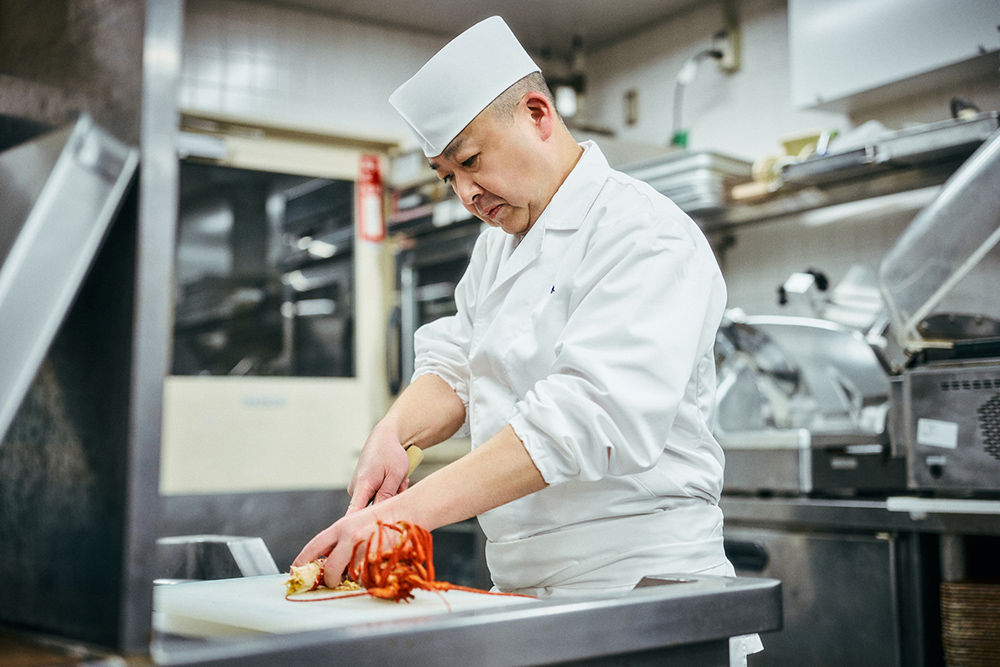
Spiny lobster sourced in Japan adds a vivid splash of color to the New Year meal. Yamamoto insists on buying it raw—weighing approximately 200 grams each—and cooking it in Sakura’s kitchen. With roughly 200 lobsters to prepare, the work begins around October.
Passing On the Craft
Four chefs, including Yamamoto, craft the New Year menu. With such a small team, they must decide which items to prepare by hand.
They simmer bamboo shoots, marinate herring roe, and carve carrots into decorative shapes. For the grilled dishes, they allow time for the savory miso marinade to infuse the ingredients.
“We make what we can by hand. I have the younger chefs cut carrots into flower shapes and practice those kinds of techniques as part of their training.”
Preparing these New Year dishes also offers experienced chefs the opportunity to pass their skills on to younger colleagues.
The Space Between the Dishes
Red, white, black, yellow, and green fill the nine compartments of the serving dish. Round shapes sit alongside slender silhouettes, while larger, more prominent elements balance smaller details.
“It doesn’t look right if all the yellow is in one place, or all the red. You don’t want to pack everything in too tightly, either. In the end, you simply have to trust your eye.”
As he composes each set, Yamamoto considers color, shape, portion size, height, and the spaces between the items.
“Japanese food is something you enjoy with your eyes as well.”
Red-and-white fish cakes, glistening black soybeans, brightly colored shrimp, carved vegetables, and festive tableware herald the start of a new year well before anyone even picks up their chopsticks.
Rather than filling every gap, Yamamoto leaves a little breathing room between the items so that each component can shine. Perhaps that has always been at the heart of Japanese food presentation: the empty spaces are essential to the beauty of the whole.
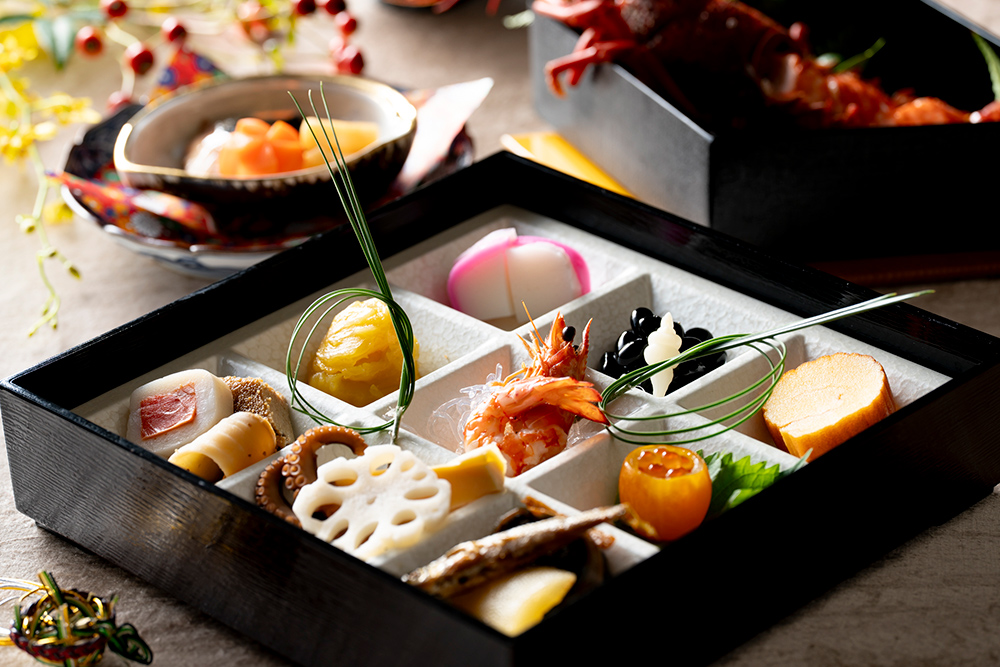
The colorful selection of New Year dishes includes red-and-white kamaboko fish cakes, black soybeans, sweet datemaki omelet, sweet kinton mash, salmon roe, shrimp, herring roe, lotus root, and bamboo shoots. Yamamoto balances not only colors, shapes, and portion size, but also the space between.
A New Year’s Stay Without the Chores
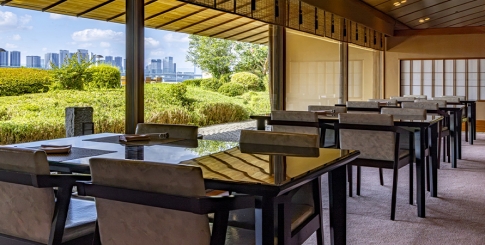
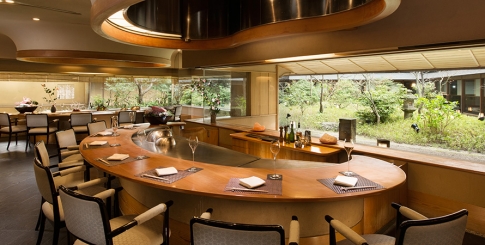
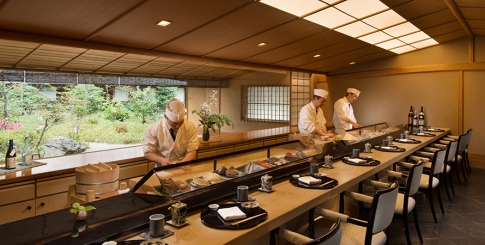
Farther inside Sakura, a garden and traditional Japanese decor come into view.
“Even the walk here builds a sense of anticipation. I want to serve food that lives up to it.”
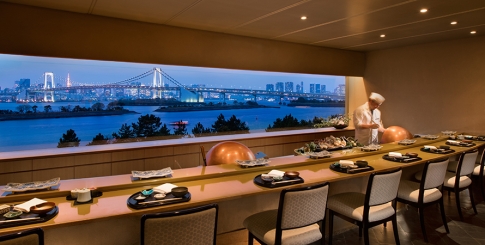
For Yamamoto, the culinary experience extends far beyond the plate. The spaces guests walk through, the tranquil views along the way, and the serenity they feel as they take their seats are all part of the meal.
Spending New Year’s at a hotel also offers a welcome change of pace from celebrating at home.
“You can relax in your room without having to do any housework and enjoy a New Year’s meal right here. For some guests, that’s reason enough to book a stay.”
There is ample time to anticipate the food, admire the tableware, and enjoy unhurried conversations with family or loved ones.
“I want guests to savor the presentation and take their time. Giving them that chance to relax is at the heart of what we offer.”
A hotel getaway need not be about filling the hours; instead, it offers the luxury of having nothing to worry about—a peaceful way to welcome the New Year.
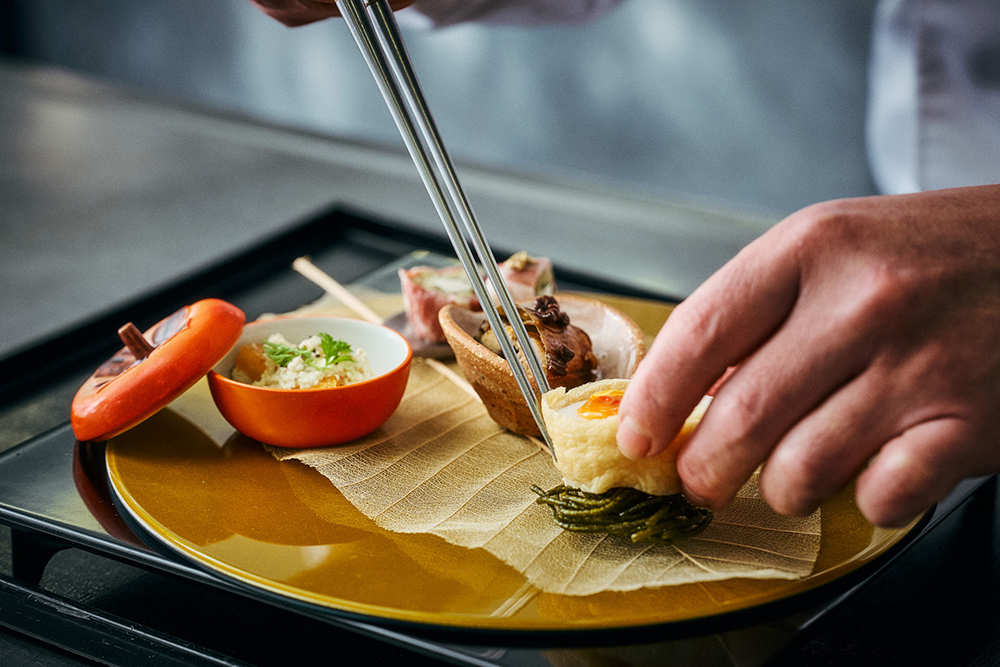
For the two-day New Year service, Sakura’s kitchen prepares as much as it can in-house, from simmering bamboo shoots and marinating herring roe to carving vegetables into intricate decorative shapes. [Provisional caption: to be replaced once the photograph is confirmed.]
Thirty Years of New Year Memories
Yamamoto joined Hilton Tokyo Odaiba around the time the hotel opened and has been working in the kitchen here for nearly 30 years.
He fondly recalls a guest who had dined at Sakura since childhood and eventually held a wedding at the hotel.
“It made me realize this was a restaurant where we’d built genuine connections with people—not just served them food.”
Some guests return every New Year. For Yamamoto, few things mean more than hearing, “We’ll be back.”
Toward the end of our conversation, Yamamoto shared a photograph of the osechi he had made for his family at home. His own calling to become a chef was inspired, in part, by a memorable New Year meal at his uncle’s house.
The flavors were so strikingly different from what they ate at home that he remembers thinking, “So this is the difference between home cooking and what a chef makes.” That discovery helped set him on his career path.
A New Year's meal someone once made for him inspired a young boy to become a chef. Today, he helps craft those cherished memories for others. Year after year, the holiday table brings back not just familiar flavors, but also the warmth and connections shared over the decades.
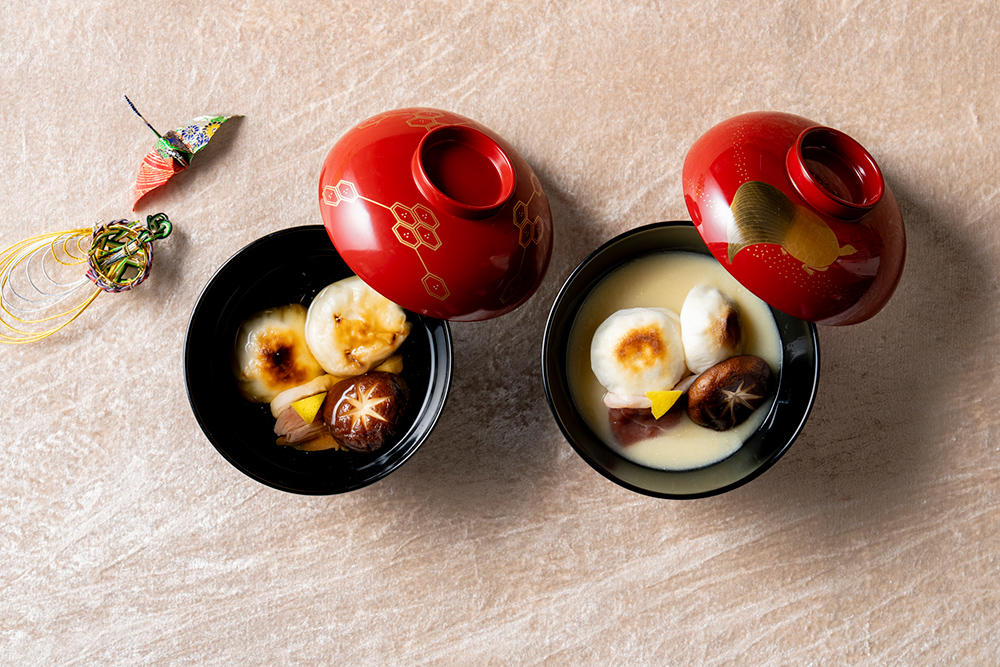
Guests can choose between two soups with their New Year meal: a clear broth or a white miso broth. Because holiday flavors vary by region and household, Sakura offers both to suit different tastes. The clear broth is light and clean-tasting; the white miso version is mellow and gently sweet.
Preparing for the New Year, Long Before Winter
Winter may still feel far off, but preparations for the New Year are already quietly underway in Sakura’s kitchen.
The chefs prepare ingredients, select tableware, and pass on their skills to younger colleagues. This year, as always, they are getting ready to serve beloved New Year dishes.
Much of that preparation goes unnoticed, unfolding gradually behind the scenes well before guests arrive.
The New Year meal is the culmination of all that quiet, dedicated work.
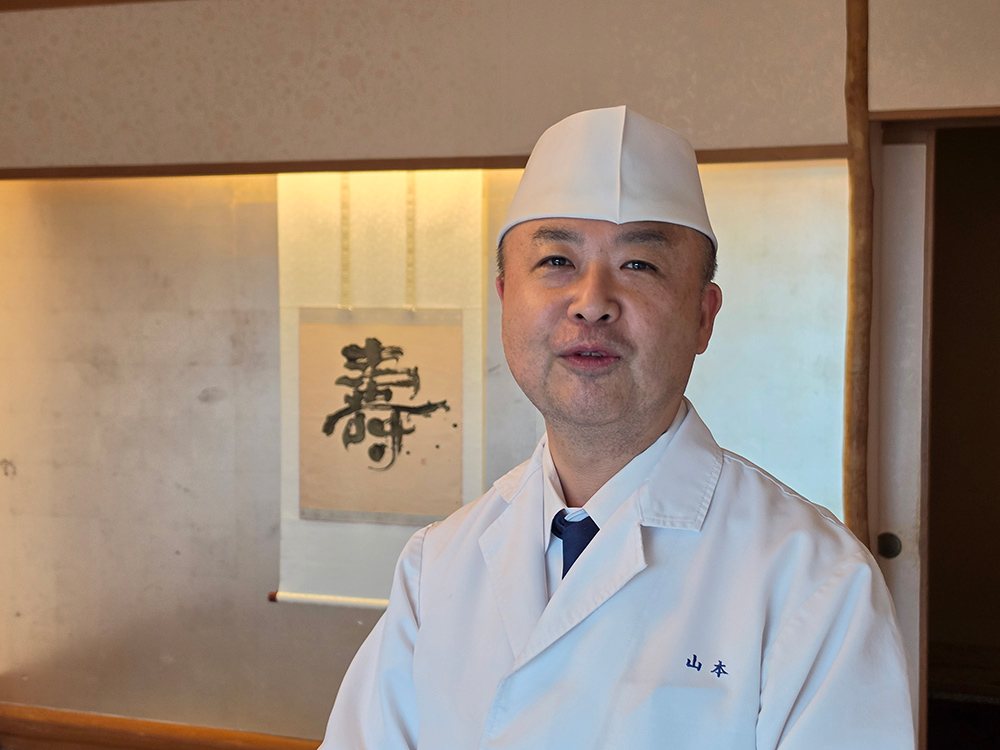
Chef Yamamoto has been preparing Japanese cuisine at Hilton Tokyo Odaiba for nearly 30 years, since the hotel’s opening. Drawing on the flavors and techniques passed down to him, he crafts a celebratory meal to welcome each New Year.


