















Tokyo Stillness
See Tokyo, differently.
History, Culture & Artisans 2026.11.06
Why Do Japanese People Display Kadomatsu? A Landscape Gardener on New Year Decorations and Everyday Life
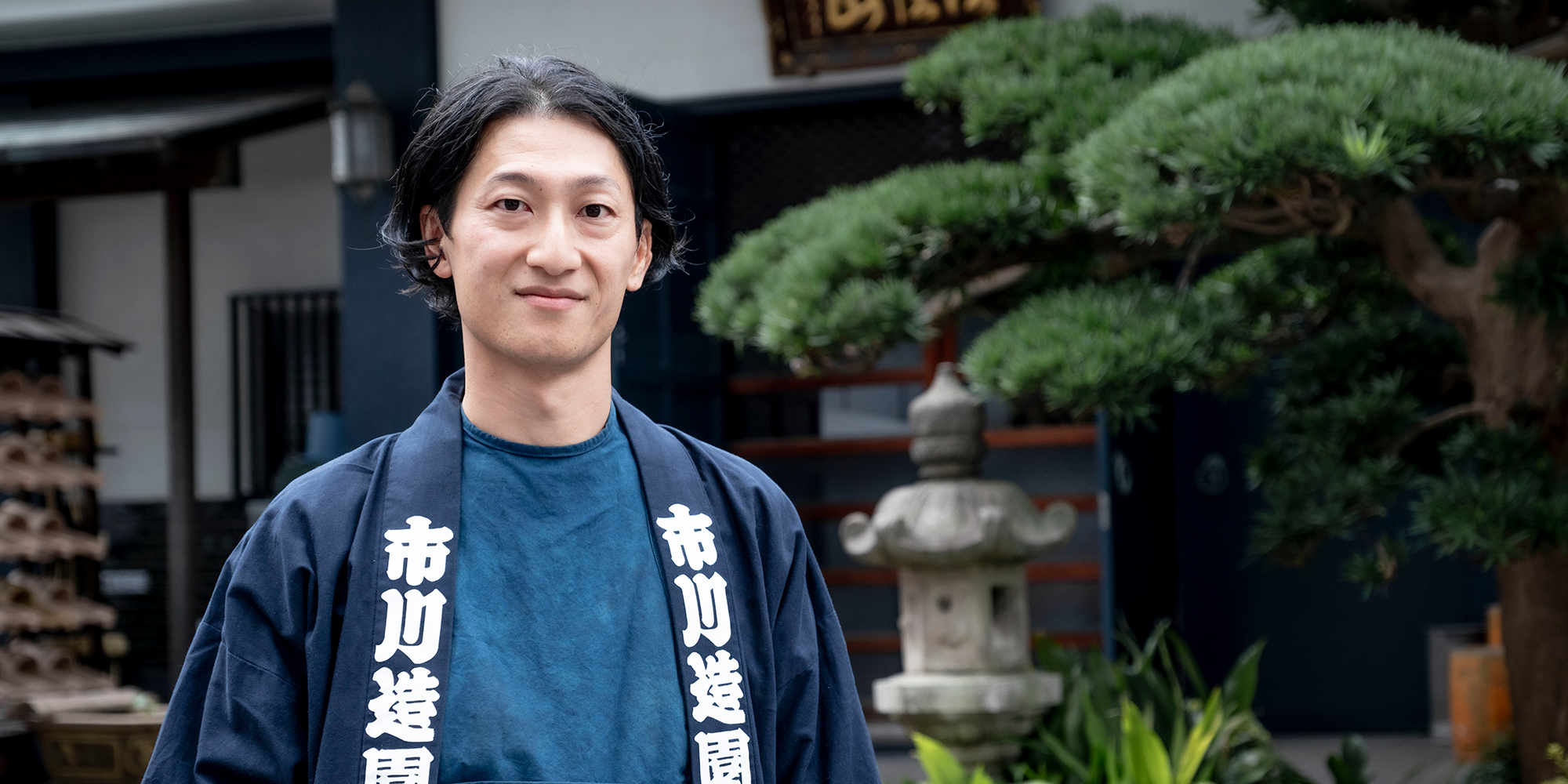
Why do people across Japan adorn their entrances with decorations made of pine and bamboo to welcome the New Year? We sat down with landscape gardener Yuya Kurihara, who shares Japanese culture through the art of crafting kadomatsu, to explore the decoration’s history, symbolism, evolution, and the quiet ways plants continue to enrich everyday life.
Yuya Kurihara
Manager of the Tokyo Office of Ichikawa Landscape Co., Ltd., and a Certified Arborist
A graduate of Tokyo University of Agriculture, Kurihara worked as a construction consultant before turning his talents to landscape gardening. In 2019, he helped launch Ichikawa Landscape’s Tokyo presence. Today, alongside managing urban green spaces and maintaining gardens, he works on the Midorishi Project, introducing the craft and possibilities of Japanese landscaping to a wider audience.
Kadomatsu: An Ancient Tradition of Welcoming the Gods
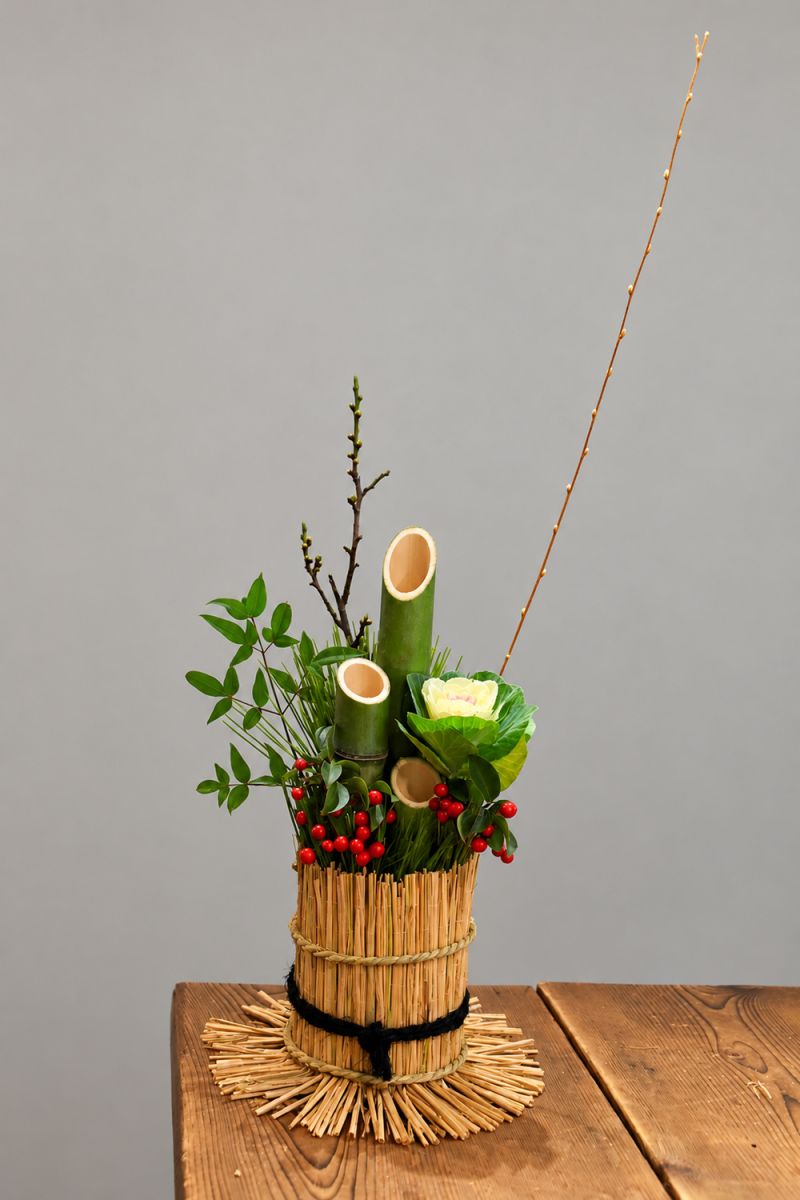
Kadomatsu are traditional New Year decorations placed at doorways and entrances to welcome Toshigami, the deity believed to bring joy and abundance in the coming year. These displays have long served a dual sacred purpose: guiding the visiting deity as a marker and acting as a yorishiro — a temporary dwelling where divine spirits can reside.
Rooted deep in the past, the tradition stretches back at least nine centuries; 12th-century Japanese poetry describes people placing pine boughs at their gates to celebrate the arrival of the New Year.
“While bamboo is the most visually prominent feature of modern arrangements, the name remains kadomatsu, not kadotake,” Kurihara explains. “Pine was always the central element of the display. Bamboo and other plants are thought to have been added over time, gradually evolving into the form we recognize today.”
Resilient evergreen pine embodies enduring vitality and longevity, while bamboo, shooting up straight and proud toward the sky, represents hopes for steady growth and prosperity.
“The form may have shifted with the eras, but the idea of using plants to welcome the New Year deity has been passed down,” Kurihara says. “To me, that is what truly matters.”
Today, most households and businesses either purchase pre-made kadomatsu or commission bespoke arrangements from artisans. From modest family homes to grand hotel lobbies, displays are tailored in scale and style to harmonize with their surroundings.
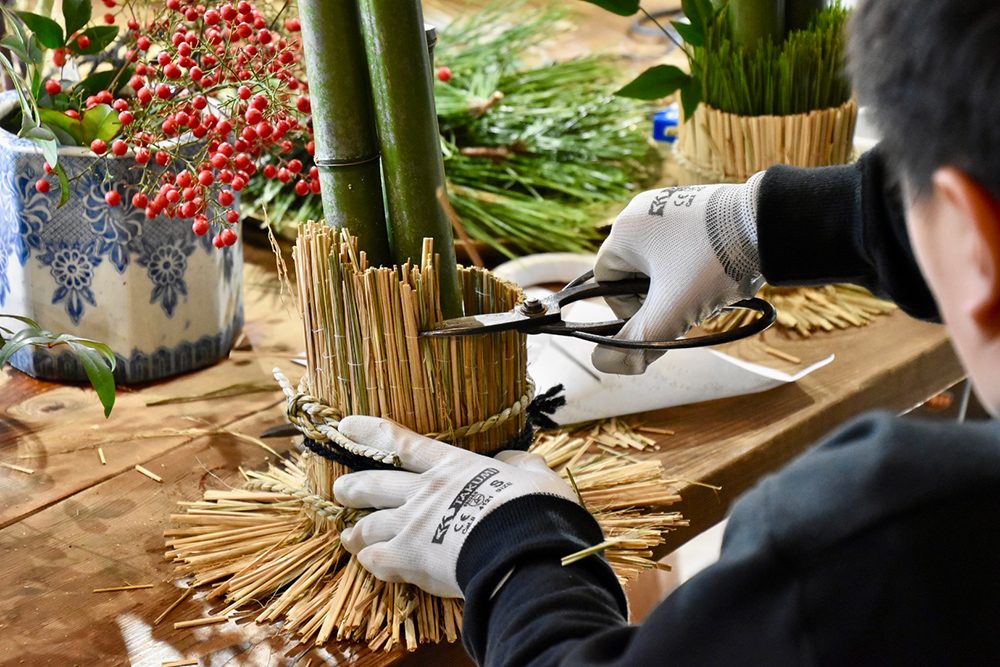
Every year, Ichikawa Landscape also hosts hands-on workshops where participants craft their own arrangements under the guidance of professional gardeners, artfully pairing pine and bamboo with nanten (heavenly bamboo) and ornamental flowering kale.
“Nearly everyone in Japan knows what kadomatsu are,” says Kurihara. “Yet remarkably, few people have ever worked with the materials themselves.”
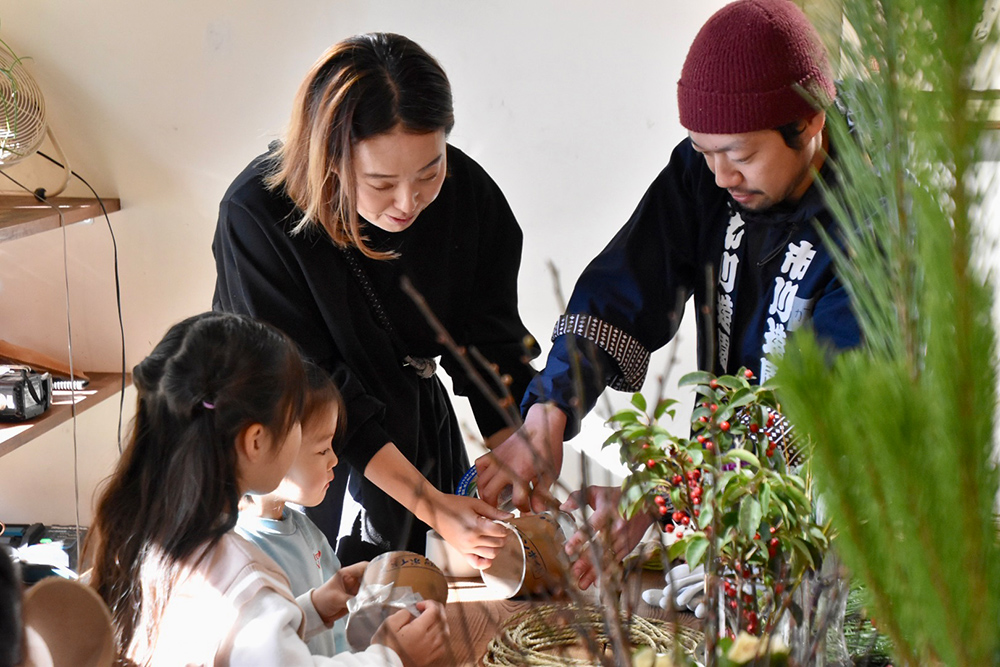
These workshops draw an eclectic mix of participants, from families with young children to dedicated flower enthusiasts and young couples.
“My goal isn’t simply to teach a formulaic arrangement,” Kurihara explains. “I want participants to reflect on why we choose pine, and why these arrangements are placed at entrances. I launched these workshops so people could discover the wonder of plants and landscaping firsthand, and see just how multifaceted a gardener’s craft can be.”
From Urban Policy to Hands-On Landscaping
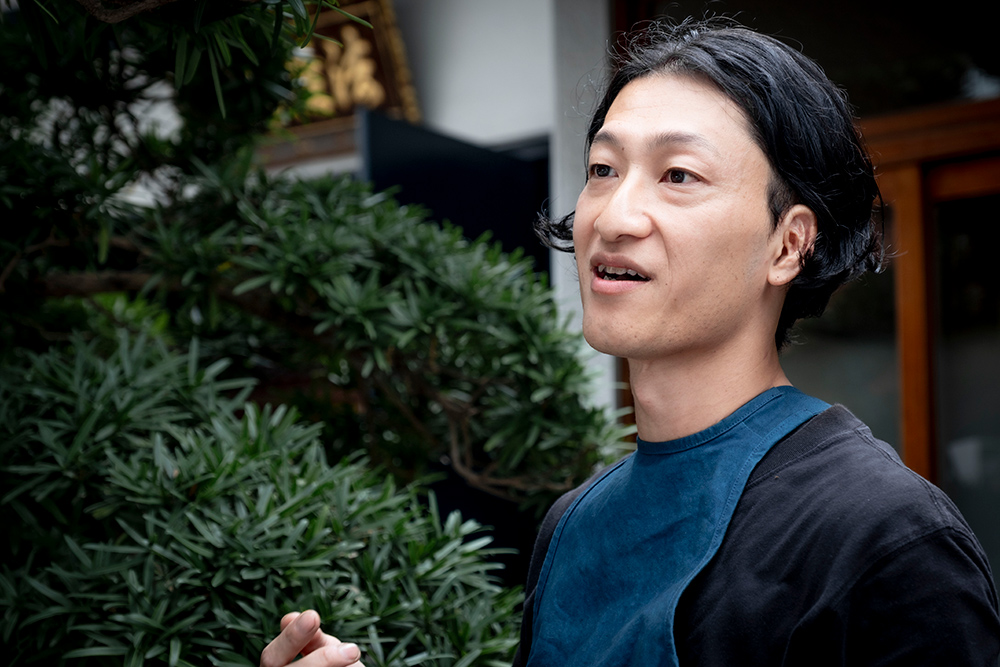
Headquartered in Aichi Prefecture, Ichikawa Landscape expanded to Tokyo in 2019. Kurihara studied landscaping and urban planning at Tokyo University of Agriculture before embarking on his career as an urban policy consultant.
“At their core, urban policy and landscape gardening share the same mission: enriching people’s lives,” says Kurihara. “Yet I longed for a more immediate, tactile connection between people and nature, so I decided to become a gardener.”
After honing his craft at a landscaping firm, Kurihara was approached by the president of Ichikawa Landscape with an invitation to help establish the company’s Tokyo operations in 2019.
“Our president often challenges us to ask how our profession can best serve society,” Kurihara reflects. “In a sprawling metropolis like Tokyo, there is so much more that skilled gardeners can do. Our Tokyo office was founded to turn that vision into reality.”
At the heart of Kurihara’s philosophy is finding a balance between tradition and fresh ideas.
“There is no single universally ‘correct’ blueprint for kadomatsu across Japan,” Kurihara notes. “Distinct regional styles blossomed in response to local customs and native vegetation. Preserving a culture isn’t necessarily cloning an ancient concept. To me, it means honoring the sacred intent of the tradition while adapting its physical expression to modern sensibilities and where it will be displayed.”
This mindset informs his approach to landscaping.
“We cherish the techniques passed down through generations, yet we remain open to new perspectives,” Kurihara says. “Looking ahead, I see so many exciting, uncharted roles for landscape gardeners to embrace.”
Nurturing Trees, Shaping Vistas: The Craft of the Japanese Landscape Gardener
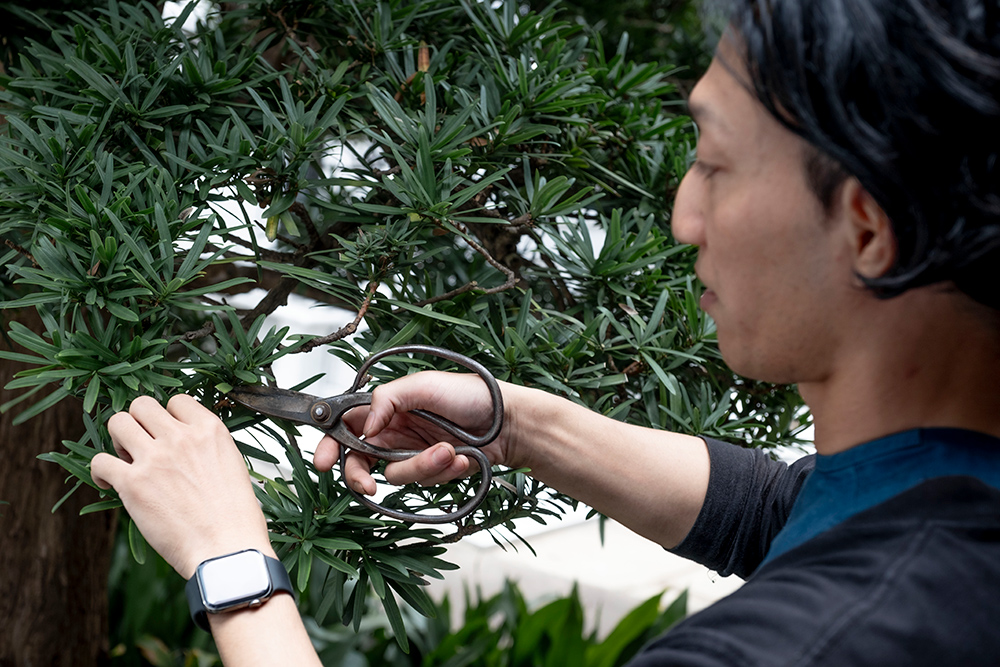
The very pine and bamboo used in kadomatsu are also timeless staples of Japanese gardens. We spoke with Kurihara about the delicate pruning techniques gardeners use to nurture and maintain these iconic plants.
“A Japanese garden often captures an entire landscape within a relatively small space,” Kurihara explains. “But plants are living things; they never stop growing. Left unchecked, an overgrown tree can quickly disrupt the harmony and balance envisioned in the original design.”
Bonsai is perhaps the most famous expression of this craft, guiding a tree’s form through the meticulous curation of branches and foliage.
“Trees depend on their leaves for photosynthesis, producing the energy they need to grow,” says Kurihara. “By carefully adjusting the amount of foliage, you can influence how a tree develops.”
Gardeners sculpt far more than individual silhouettes; they shape the perception of space itself. Central to this is sukashi-sentei, or thinning pruning, a technique where branches are selectively removed to control foliage density.
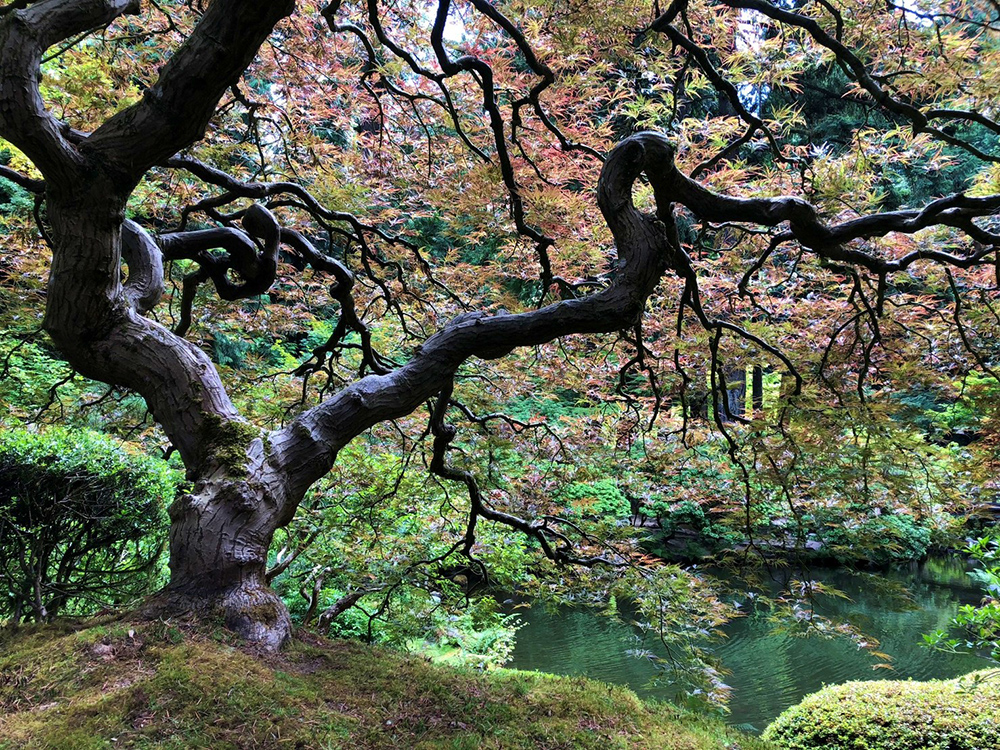
A Japanese maple at the Portland Japanese Garden in Oregon, its airy canopy shaped through thinning pruning.
“Japanese strolling gardens are designed to be experienced as you walk through them,” Kurihara reflects. “There is a profound difference between seeing an entire scene at once and having the scenery gradually reveal itself. By thinning branches, we can frame the views we want visitors to discover and softly veil what should remain hidden. In this way, pruning becomes a means of directing how a space is experienced.”
Today, that thoughtful approach extends far beyond traditional gardens.
“We apply techniques developed in classic gardens to the stewardship of urban green spaces,” Kurihara notes. “It is all about considering the vital role greenery plays not just in the environment, but in daily urban life.”
Connecting People and Greenery: Enriching Urban Life
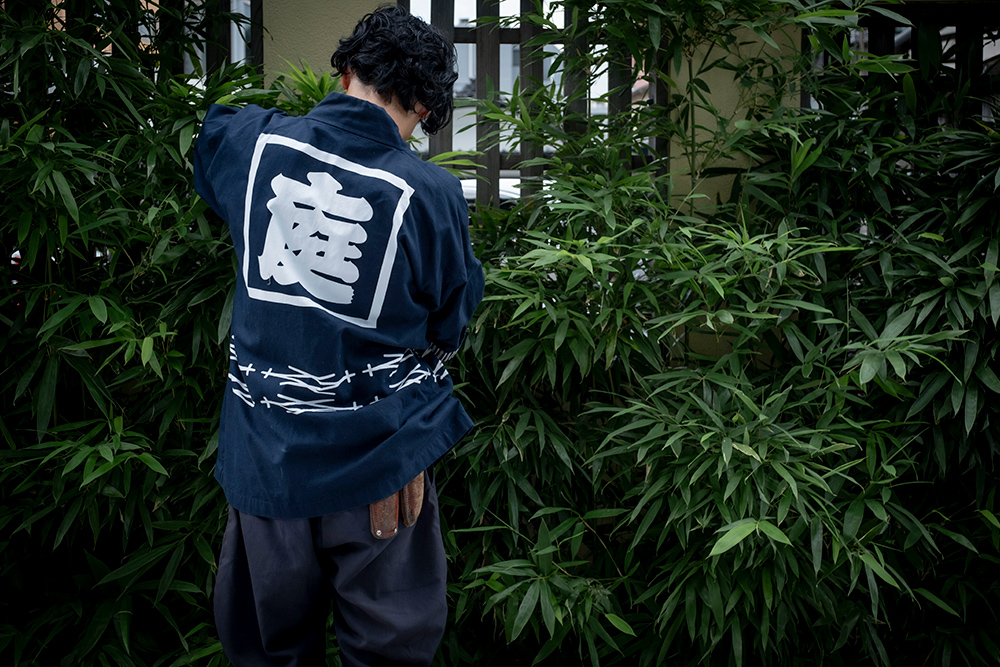
At the heart of Kurihara’s philosophy lies a simple goal: bridging the gap between people and nature. From tree-lined avenues and apartment landscaping to sprawling public parks, urban greenery is woven into the very fabric of everyday life.
“When branches grow unchecked, they can obstruct sightlines or crowd walkways,” Kurihara points out. “But urban greenery also helps reduce heat and provides habitat for wildlife. We prune with purpose, balancing public safety with aesthetics. The true art lies in helping nature fit seamlessly into people’s lives.”
Whether he is conducting a kadomatsu workshop or tending to urban streetscapes, his underlying mission remains unchanged: enriching daily life through greenery.
“Landscaping is more than just keeping trees looking neat,” Kurihara reflects. “It sustains our urban environment, elevates daily well-being, and carries cultural heritage forward into the future. I hope more people come to appreciate the vast potential of this craft.”
Kadomatsu: A Timeless New Year Welcome

Kadomatsu gracing the entrance of Hilton Tokyo Odaiba in the past
Placing kadomatsu at entryways to usher in the New Year is an enduring Japanese tradition, a custom of welcoming the deity Toshigami into the spaces where people live, work, and gather.
Embracing this heritage, Hilton Tokyo Odaiba displays kadomatsu at its entrance and entrance hall during the year-end, welcoming visitors as a new year begins.
Against the backdrop of Tokyo Bay, take a moment to admire these quintessentially Japanese decorations. Once you understand the symbolism behind their design—and the skills of the artisans keeping the craft alive—a familiar New Year scene takes on a whole new meaning.


